

The Symbolism of Hairwork Jewelry Across Eras
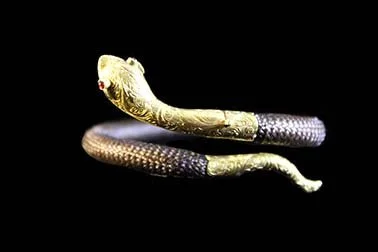
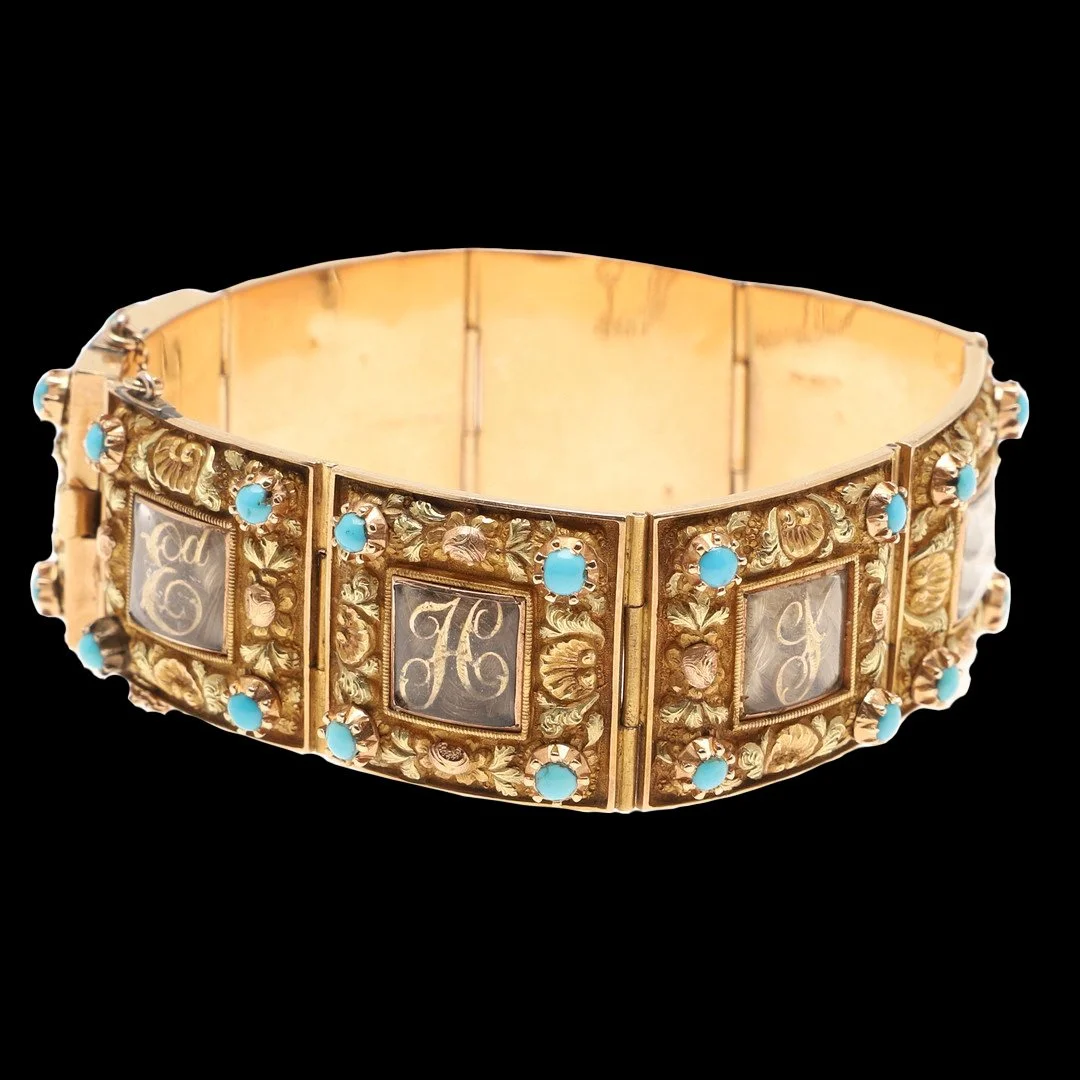
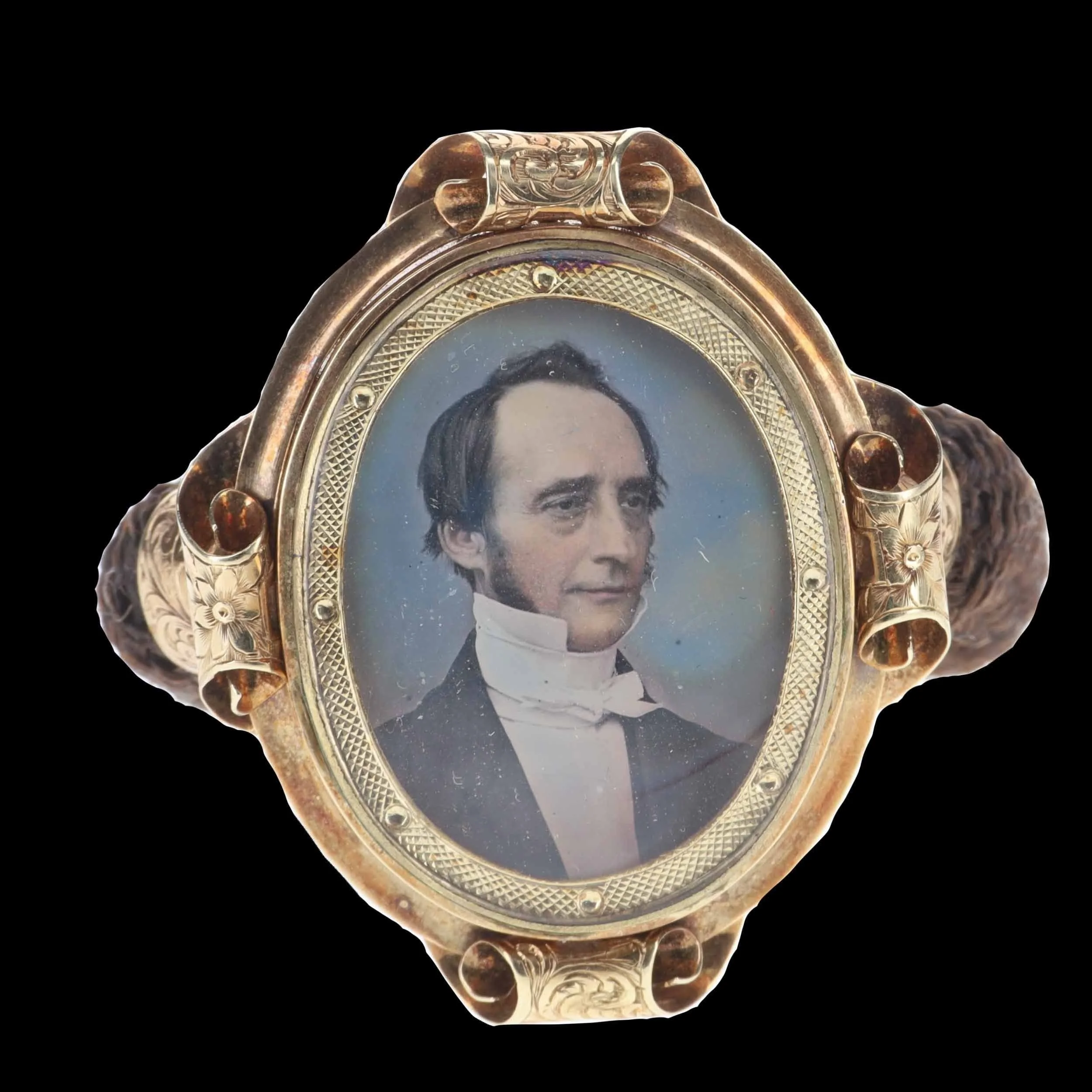
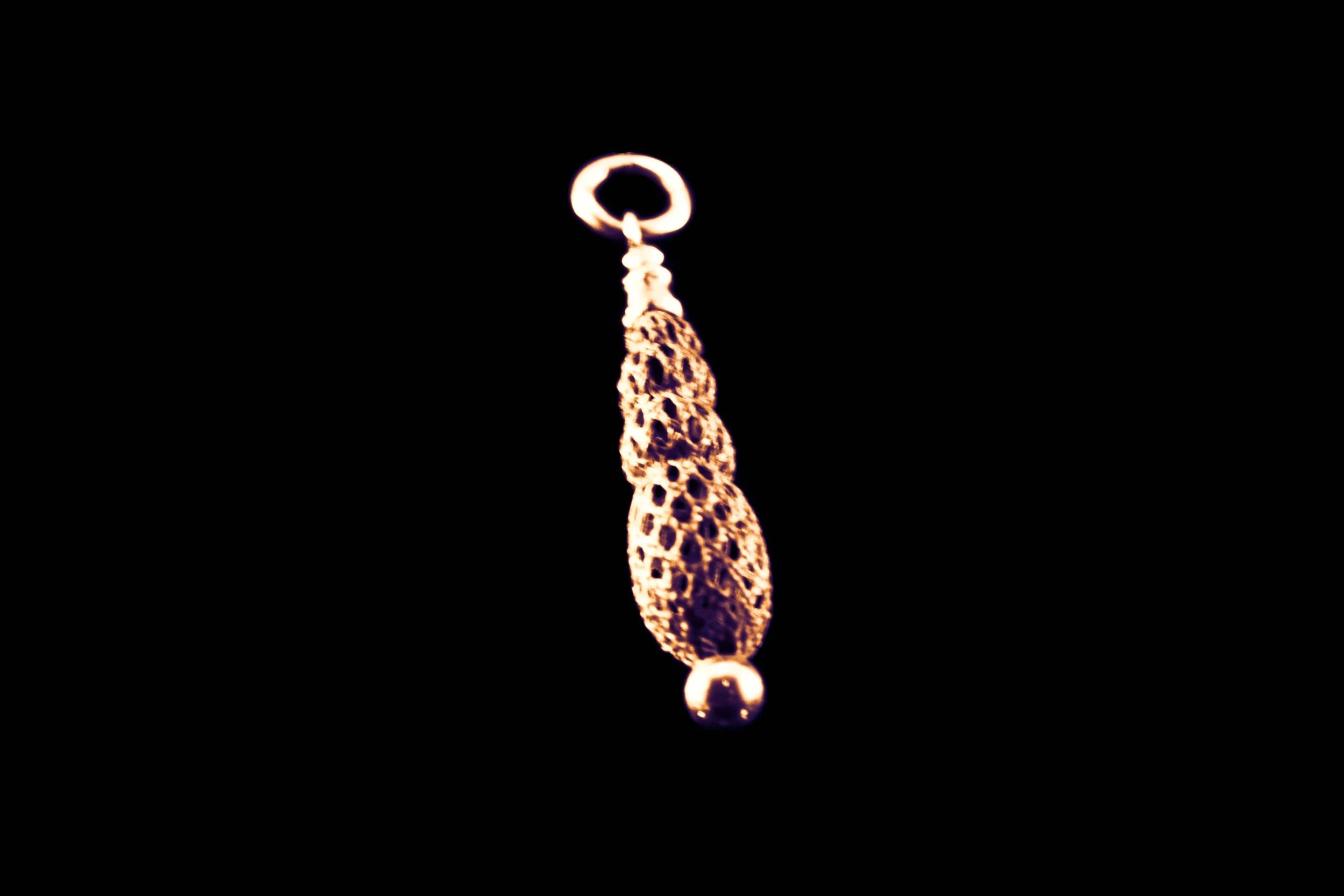
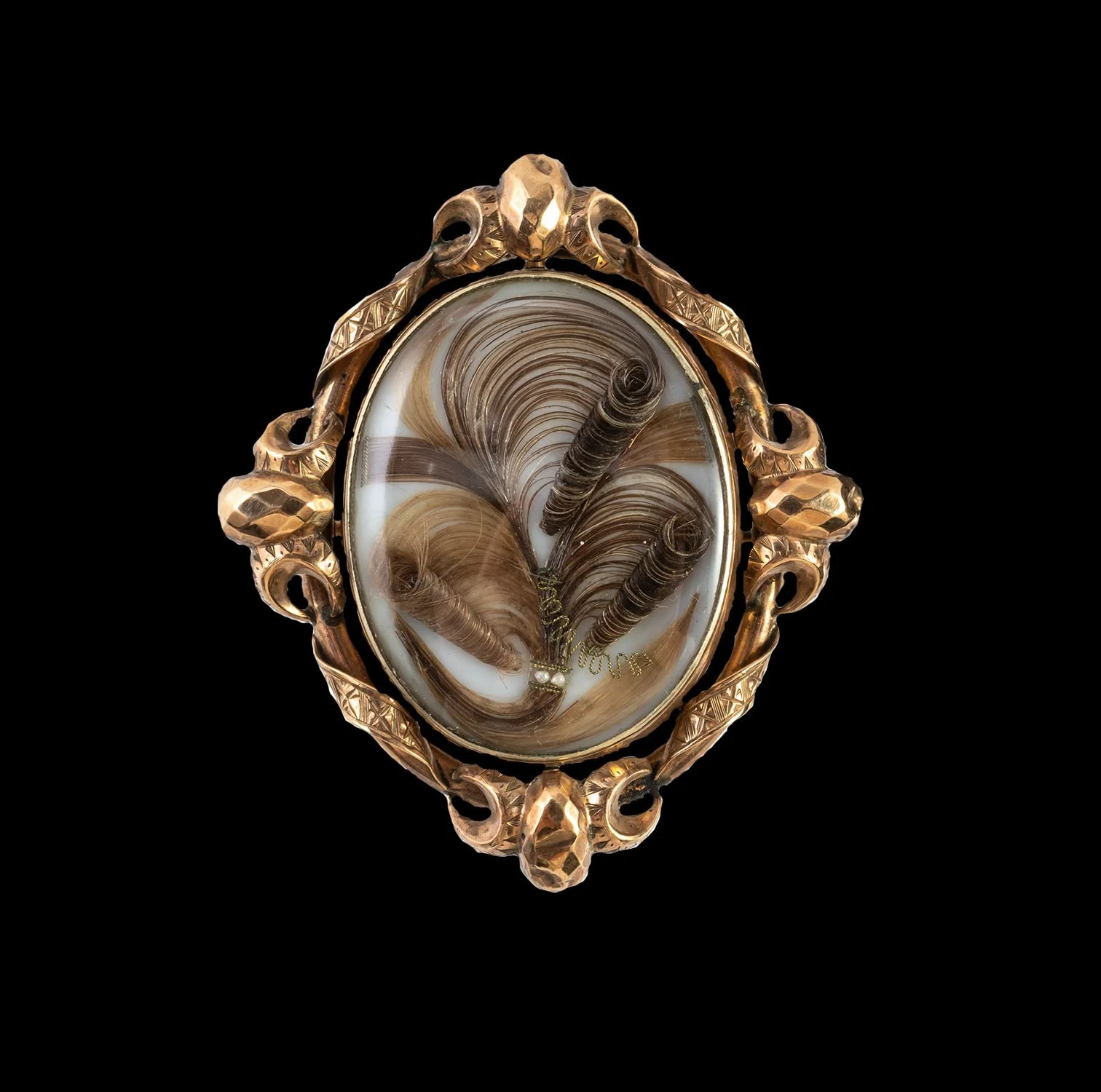
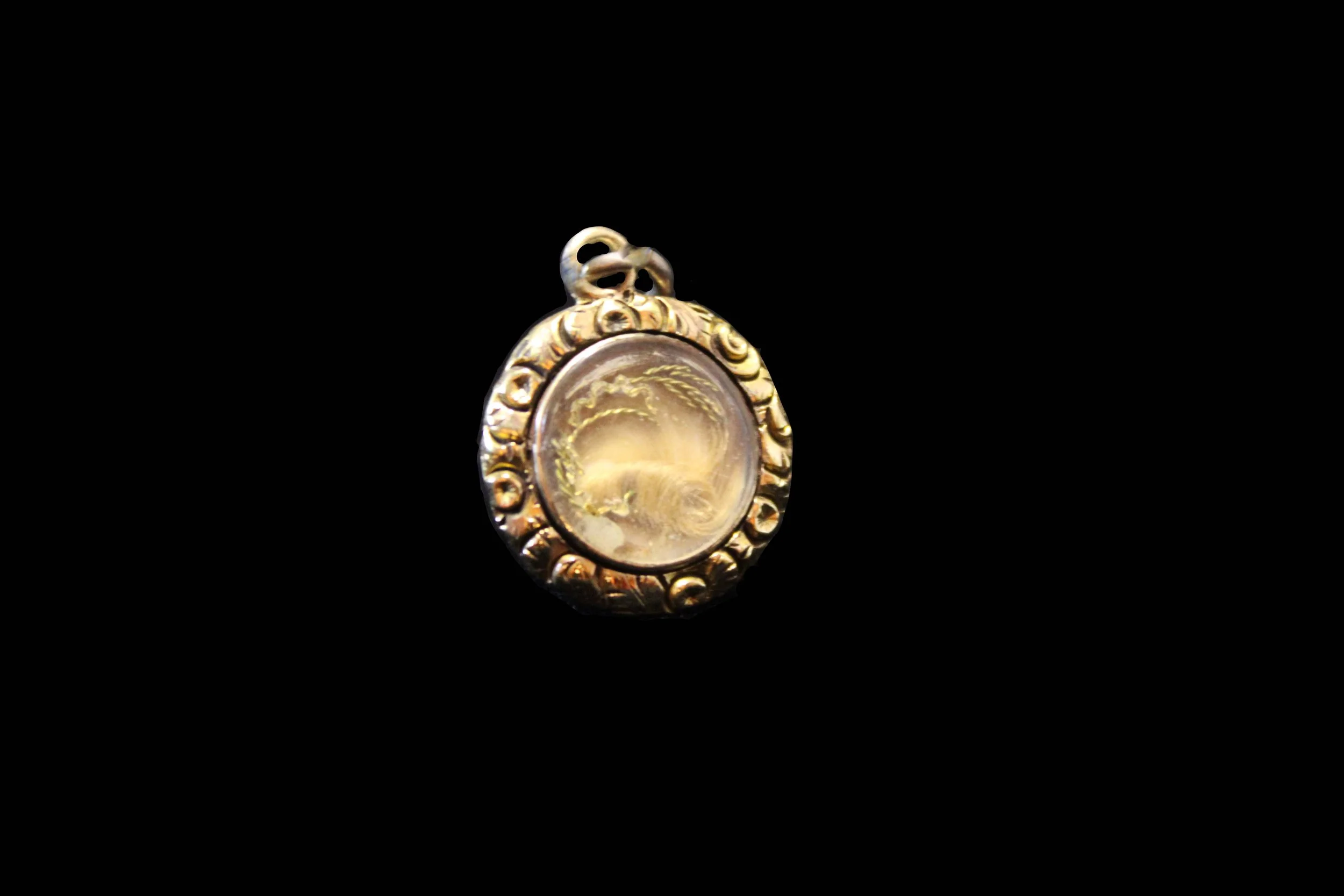
Hairwork jewelry represents one of the most intimate forms of adornment in the history of decorative arts. Unlike gemstones mined from the earth or metals shaped by the hand of a goldsmith, hairwork jewelry incorporates a material that once belonged to a living person. A lock of hair—cut from a beloved family member, spouse, child, or friend—was transformed into jewelry that could be worn close to the body, preserving the physical presence of the individual it represented.
Because human hair does not easily decay, it became a powerful symbol of permanence. In an age when photography was rare and life expectancy uncertain, a strand of hair served as a tangible relic of identity. To wear such a piece was not simply to decorate oneself, but to carry memory itself.
Hair as a Symbol of Love and Memory
Throughout the Georgian and Victorian periods (approximately 1714–1901), hair was widely regarded as the most personal of human materials. Unlike clothing or possessions, it was literally part of the individual. When fashioned into jewelry—woven into intricate braids, plaits, or floral designs—it functioned as a lasting expression of emotional bonds.
Hairwork jewelry frequently commemorated:
Romantic devotion between spouses or lovers
Familial attachment between parents and children
Friendship and loyalty among close companions
The exchange of hair jewelry could mark an engagement, a departure, or a declaration of enduring affection. It symbolized a connection that transcended distance and time.
Mourning and Remembrance
Hairwork jewelry also held a profound role in mourning traditions. During the nineteenth century, particularly in the Victorian era, elaborate customs governed the expression of grief. Locks of hair taken from the deceased were often woven into brooches, rings, or bracelets, allowing mourners to carry a physical remnant of the departed.
These pieces were not intended as macabre objects but as acts of reverence and remembrance. The hair represented continuity—the idea that love and memory persisted even after death.
Mourning hairwork frequently appeared in:
Brooches containing braided hair under crystal
Rings with hair set beneath glass compartments
Bracelets woven entirely from hair strands
Lockets containing preserved locks
Such jewelry functioned as both relic and memorial, linking the living to those they had lost.
Craftsmanship and Devotion
Creating hairwork jewelry required remarkable skill. Hair was meticulously cleaned, sorted by color and texture, and then woven or braided using specialized tools. Artisans could produce astonishingly intricate patterns, including knots, chains, flowers, and architectural motifs.
In many cases, hairwork was also crafted within the home. Victorian women sometimes learned hair weaving as a domestic art, creating bracelets or watch chains as sentimental gifts. Whether made by a professional jeweler or by a loved one, the process itself became part of the symbolism—an act of patience and devotion.
A Material of the Human Story
Today, hairwork jewelry is recognized not only as a decorative art but as a deeply human artifact. Each piece represents a story of attachment: a marriage, a child remembered, a friendship preserved across distance, or a life mourned.
Unlike most jewelry materials, hair carries the trace of an individual life. For collectors and historians, hairwork jewels offer a rare glimpse into the emotional culture of the eighteenth and nineteenth centuries—an era when jewelry served not merely as ornament, but as a vessel for memory itself.
Within the tradition of sentimental jewelry, hairwork stands as perhaps the most intimate form ever created: a union of craft, emotion, and identity woven into a form meant to endure across generations.