

The Mysterious Georgian Lover’s Eye Miniatures
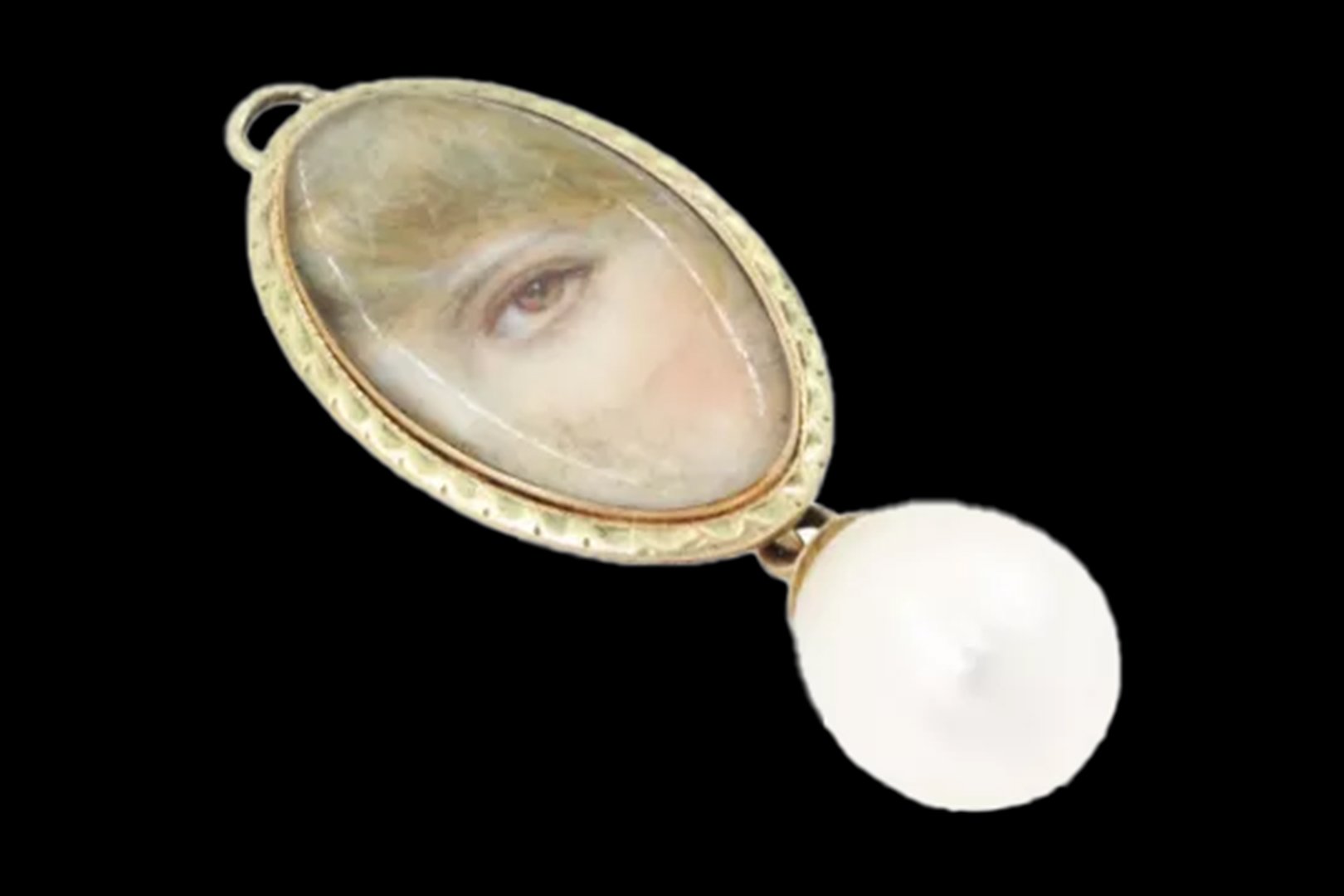
These pieces are very difficult to find and rarely come up at Auction
Estimate 200- 400GBP
Sold for 1,700 GBP
I am searching to this day for good examples from reputable European Auction Houses.
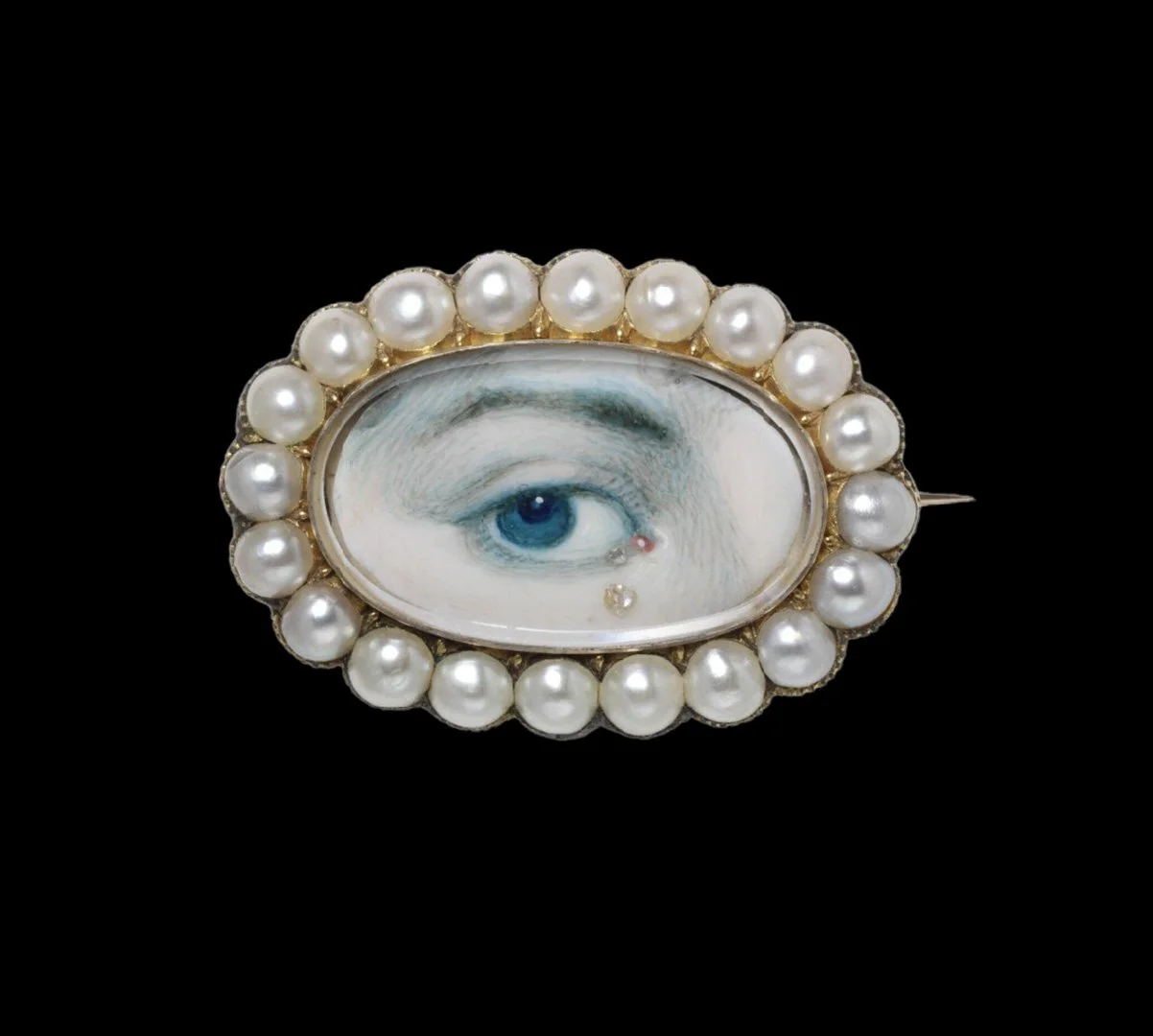
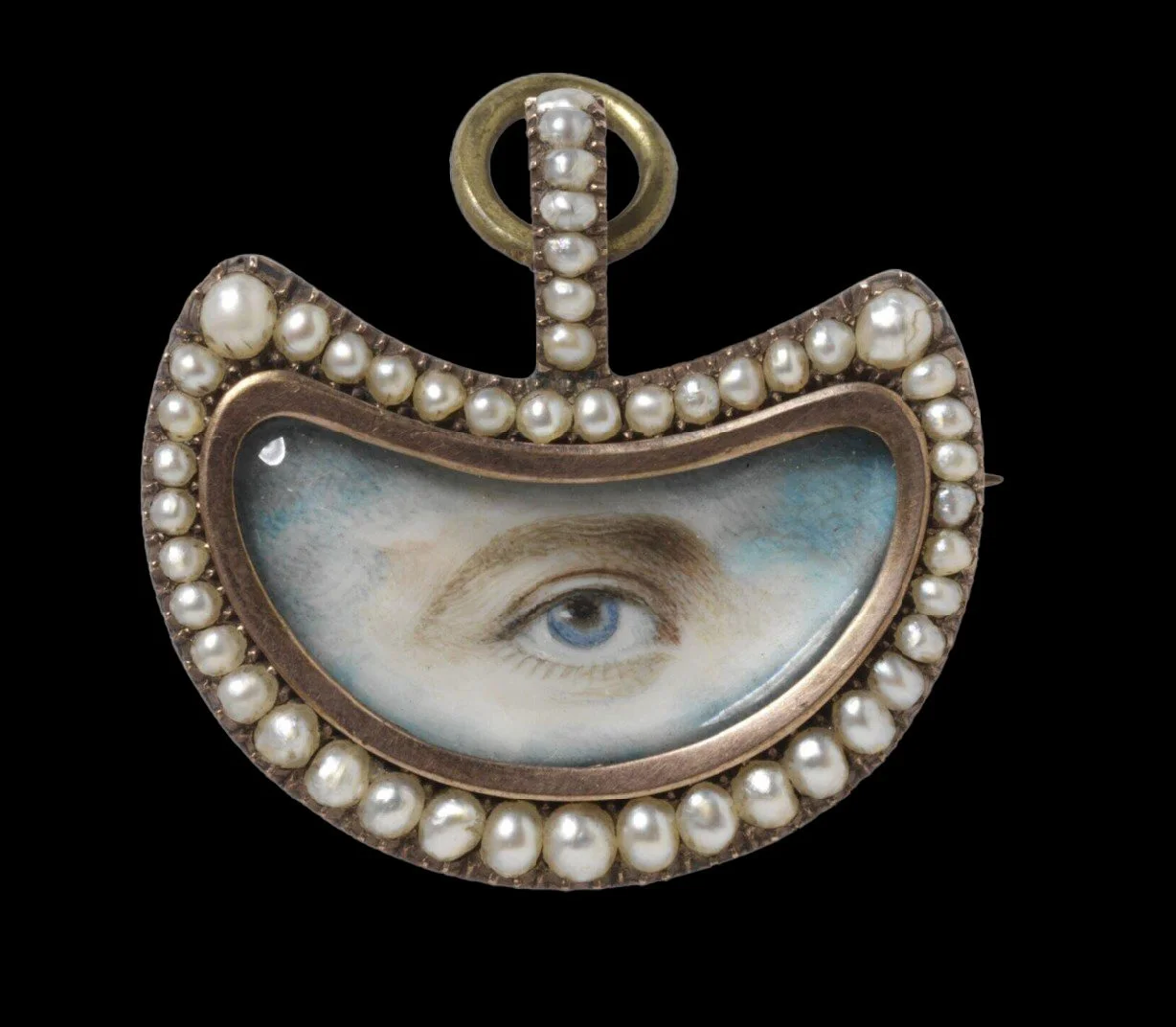
Among the most mysterious and evocative forms of sentimental jewelry, the Lover’s Eye miniature occupies a singular place in the history of Georgian decorative arts. These small portrait miniatures depict only a single human eye—rendered in delicate watercolor on ivory and mounted within rings, brooches, lockets, or pendants. Without the surrounding face, the eye becomes both intensely personal and deliberately anonymous, a secret portrait recognizable only to the person for whom it was intended.
Created primarily during the late eighteenth and early nineteenth centuries, Lover’s Eye jewels were exchanged as tokens of devotion, intimacy, and remembrance. Their symbolism rests in the idea that the eye alone—often called the “window of the soul”—could capture the essence of a beloved person while preserving the privacy of the relationship.
Origins of the Lover’s Eye Tradition
The tradition is widely believed to have begun in 1785, when the future King George IV of Britain, then Prince of Wales, secretly commissioned a miniature portrait of his own eye for Maria Fitzherbert, the Catholic widow he had secretly married against royal approval. The portrait allowed him to send a likeness of himself without revealing his identity to others who might see the jewel.
The concept quickly captured the imagination of Georgian society. Within aristocratic circles, commissioning an eye miniature became a romantic gesture—an intimate keepsake exchanged between lovers, spouses, and close companions.
Symbolism and Meaning
The Lover’s Eye jewel functions as both portrait and cipher. By isolating a single eye, the artist creates a representation that is deeply recognizable to the recipient yet concealed from the outside world.
This unusual format carried several symbolic meanings:
Intimacy and secrecy — the identity of the subject remains hidden from others.
Enduring affection — the gaze symbolizes constant watchfulness and devotion.
Emotional presence — the eye suggests that the beloved continues to “look upon” the wearer.
Private communication — a visual language shared only between two people.
For this reason, Lover’s Eye miniatures were often worn close to the body or concealed within lockets.
Artistic Craftsmanship
Despite their small scale—often less than a centimeter in height—Lover’s Eye portraits required extraordinary artistic precision. Miniaturists painted them in watercolor using extremely fine brushes, sometimes containing only a few hairs.
The works were typically executed on thin slices of ivory, which provided a luminous surface that allowed the translucent pigments to mimic the softness of human skin. Artists captured minute details such as:
Individual eyelashes
Reflections of light within the iris
Fine veins within the sclera
The subtle shading of eyelids and brows
The resulting portraits possess a remarkable sense of life and emotional depth.
Materials and Settings
The miniatures were usually mounted in finely crafted gold settings, often surrounded by pearls—symbols of purity and tears. Many examples also incorporate additional sentimental elements, including:
Hairwork compartments on the reverse
Enamel inscriptions
Mourning symbolism, such as black enamel borders
Lockets containing miniature relics
These features transformed the jewel into a complex object of memory and devotion.
A Rare Surviving Art Form
Today, authentic Georgian Lover’s Eye miniatures are considered exceptionally rare. Their production was limited to a relatively brief period between the 1780s and early nineteenth century, and many examples were privately commissioned and never widely recorded.
As a result, each surviving piece represents not only a remarkable example of miniature portraiture but also a fragment of an intimate human story—one that may never be fully known.
In their quiet gaze, Lover’s Eye jewels preserve a moment of devotion from more than two centuries ago. They remain among the most poetic objects ever created in jewelry: a single eye, watching across time.