

Acrostic Jewelry: Hidden Messages in Gemstones
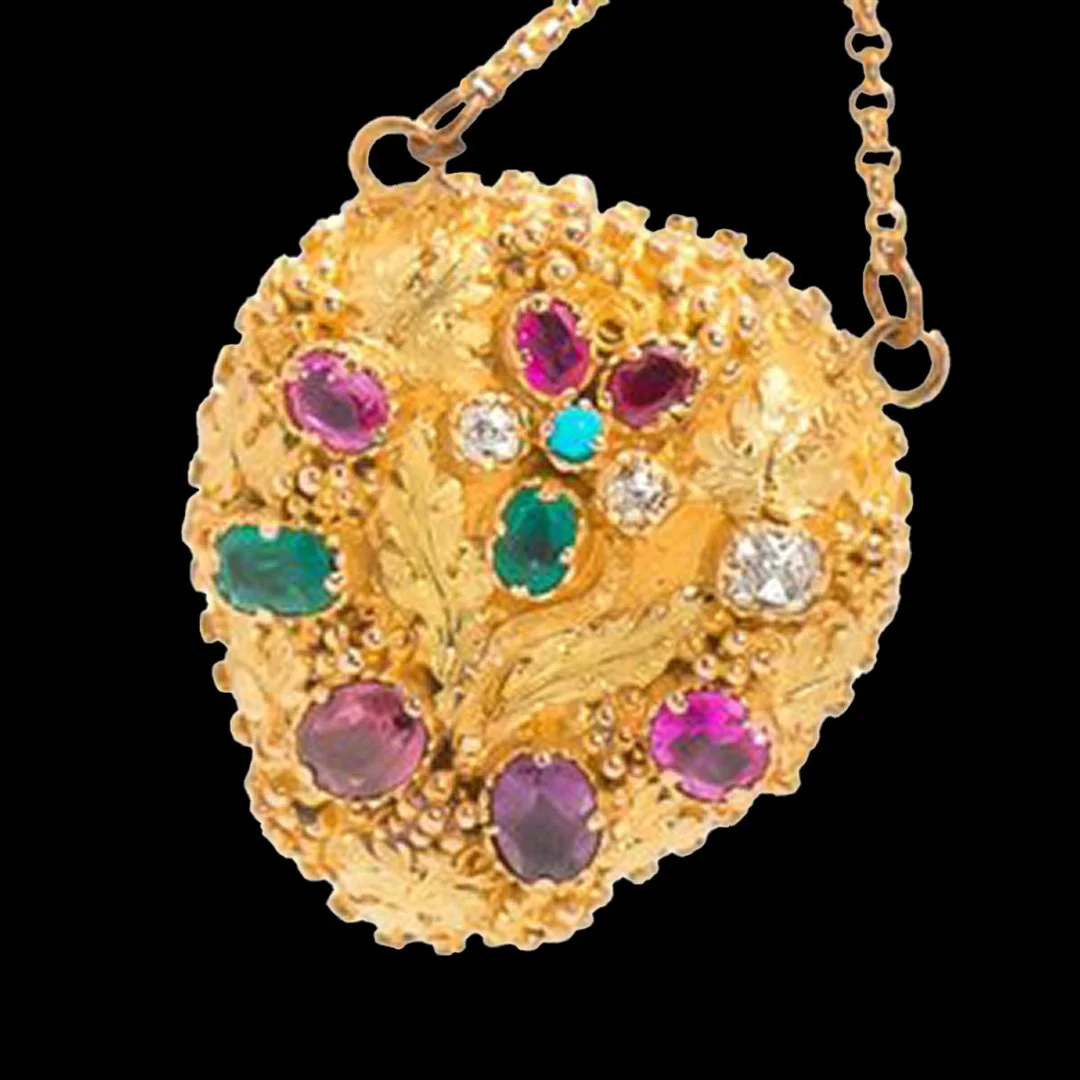
Acrostic jewels were often commissioned pieces created to convey a specific message between individuals.
I am searching respected European Auction Houses to find pendants, necklaces and bracelets. Check back often.
Acrostic jewelry is one of the most intellectually playful and romantically expressive forms of sentimental jewelry produced during the eighteenth and nineteenth centuries. In these pieces, the first letters of a sequence of gemstones spell out a hidden word or message. By arranging gems whose names begin with specific letters, jewelers created coded declarations of affection, loyalty, or remembrance that could be worn as a private symbol between giver and recipient.
The tradition emerged in late Georgian jewelry of the late eighteenth century and remained popular throughout the early Victorian era. One of the most famous historical examples was a ring given by Napoleon Bonaparte to Empress Joséphine, composed of gemstones spelling the word “REGARD.” This ingenious use of gemstones as a form of language captured the imagination of jewelers and patrons alike, leading to the creation of many similar pieces throughout the nineteenth century.
Common gemstone combinations included:
REGARD – Ruby, Emerald, Garnet, Amethyst, Ruby, Diamond
DEAREST – Diamond, Emerald, Amethyst, Ruby, Emerald, Sapphire, Topaz
ADORE – Amethyst, Diamond, Opal, Ruby, Emerald
These jewels were often set in rings, brooches, bracelets, and occasionally pendants. Because each stone contributed both color and meaning to the composition, acrostic jewels display a vibrant sequence of gemstones arranged in carefully considered order. The resulting pieces possess both visual beauty and a concealed narrative, making them among the most poetic creations of nineteenth-century jewelry design. Acrostic jewelry belongs to the broader tradition of sentimental jewelry, a category that also includes lover’s eye miniatures, hairwork pieces, and mourning jewelry. In all of these forms, jewelry served not merely as ornament but as a deeply personal expression of emotion, memory, and connection.
What COLLECTORS Should Look for in Acrostic Jewelry
For collectors, acrostic jewelry offers a fascinating combination of symbolism, craftsmanship, and historical romance. Several characteristics help distinguish exceptional examples.
Clear and Correct Gemstone Sequences
The defining feature of acrostic jewelry is the gemstone spelling itself. Collectors should verify that the sequence of stones accurately forms the intended word. Over time, stones may have been replaced during repairs, sometimes disrupting the original message. A correct and complete gemstone arrangement significantly enhances the historical integrity and value of the piece.
Original Gemstones
Whenever possible, the gemstones should be original to the jewel. Antique stones often display hand-cut characteristics typical of the Georgian and Victorian periods, such as old mine cuts, rose cuts, or early cushion cuts. These cuts reflect the gem-cutting techniques of the era and contribute to the authenticity of the jewel.
Period Settings and Construction
Most acrostic jewelry dates from the late eighteenth through mid-nineteenth centuries, when gold settings and closed-back mountings were common. Georgian examples frequently feature foiled gemstone settings, which enhance the brilliance of the stones. Victorian examples may display more open settings as gem-cutting technology advanced.
The craftsmanship of the mount should show careful symmetry and thoughtful arrangement of stones, ensuring the word remains legible while maintaining aesthetic harmony.
Balance of Color and Design
Beyond the hidden message, successful acrostic jewelry also demonstrates a strong sense of design. The colors of the gemstones should form a visually pleasing sequence, with stones proportionally matched in size and shape. Fine examples achieve a balance between the symbolic meaning of the stones and the decorative beauty of the jewel itself.
Provenance and Historical Context
As with all antique jewelry, provenance can enhance both scholarly and collector interest. Pieces with documented history, original boxes, or known ownership often carry greater historical significance.
Enduring Appeal
Acrostic jewelry remains highly sought after today because it embodies the romantic spirit of the Georgian and Victorian eras. Each piece represents a private message preserved in gemstones—a hidden language of love and devotion worn close to the body.
For collectors, these jewels offer more than aesthetic beauty. They reveal the ingenuity of historic jewelers and the deeply personal role jewelry once played in expressing human emotion. In this way, acrostic jewelry stands as a remarkable fusion of artistry, symbolism, and sentiment, capturing the enduring desire to transform words of affection into objects of lasting beauty.
Rarity of Acrostic Jewelry: How Difficult Are These Pieces to Find?
Acrostic jewelry occupies a fascinating position in the antique jewelry market. While examples do appear in auctions and dealer inventories, well-preserved and correctly composed pieces are considerably rarer than many collectors initially expect. Their scarcity results from several historical and practical factors related to how these jewels were originally made and how they have survived over time.
Limited Original Production
Unlike many types of Victorian jewelry that were produced in large quantities for general sale, acrostic jewels were often commissioned pieces created to convey a specific message between individuals. Because the gemstone arrangement needed to spell a particular word, each jewel required careful planning and the availability of specific stones in the correct order.
This constraint limited mass production. A jeweler might only produce a small number of such pieces at any given time, especially when the design involved uncommon gemstones such as topaz, opal, or amethyst arranged in precise sequences.
Dependence on Specific Gemstones
The acrostic structure itself introduces an additional rarity factor. For a word such as DEAREST, the jeweler needed seven different gemstones—diamond, emerald, amethyst, ruby, emerald, sapphire, and topaz—in stones that matched in size and quality. If even one stone was unavailable or unsuitable, the entire composition could not be completed.
Because of this, the creation of acrostic jewelry required both careful gemstone sourcing and thoughtful design, making each piece relatively labor-intensive compared with standard gemstone jewelry.
Alterations Over Time
Another factor affecting rarity today is the number of pieces that have been altered or repaired during their lifetimes. Over generations, gemstones were sometimes replaced if they were damaged or lost. Unfortunately, replacement stones were not always selected according to the original acrostic sequence, which can disrupt the hidden message.
For collectors, intact examples where the gemstone arrangement still spells the intended word are significantly more desirable and therefore more difficult to find.
Survival and Wear
Many acrostic jewels were worn daily as sentimental tokens, particularly rings given as romantic gifts. Because of this regular use, some pieces experienced heavy wear, resizing, or structural changes. Others were dismantled so their gemstones could be reused in later jewelry designs, a common practice during the nineteenth and early twentieth centuries.
As a result, relatively few examples survive today in completely original condition with their original gemstone sequences intact.
Relative Availability in the Market
While acrostic jewelry does appear in the antique market—particularly in rings and occasionally bracelets—truly exceptional pieces remain uncommon. Collectors generally encounter:
Rings more frequently than other forms
Bracelets and brooches less often
Longer acrostic words or unusual gemstone combinations only occasionally
Pieces spelling common words such as REGARD or DEAREST are the most frequently encountered. More unusual or longer messages are considerably rarer.
What Makes a Piece Especially Rare
Collectors tend to prize acrostic jewelry when it possesses several key attributes:
The correct gemstone sequence forming the intended word
Original antique gemstone cuts such as old mine or rose cuts
Unaltered gold settings from the Georgian or early Victorian period
A balanced design with well-matched stones
Documented provenance or original presentation boxes
When these characteristics are present together, acrostic jewels become highly desirable examples of sentimental jewelry from the eighteenth and nineteenth centuries.
Enduring Collector Interest
The enduring appeal of acrostic jewelry lies in its combination of romantic symbolism, intellectual ingenuity, and visual beauty. Each jewel contains a hidden message preserved in gemstones, transforming the object from a simple ornament into a coded expression of affection.
For collectors today, discovering a well-preserved acrostic jewel offers a rare glimpse into the personal relationships and sentimental traditions of the Georgian and Victorian eras—an enduring reminder of how jewelry once served as a language of love.