 Image 1 of 5
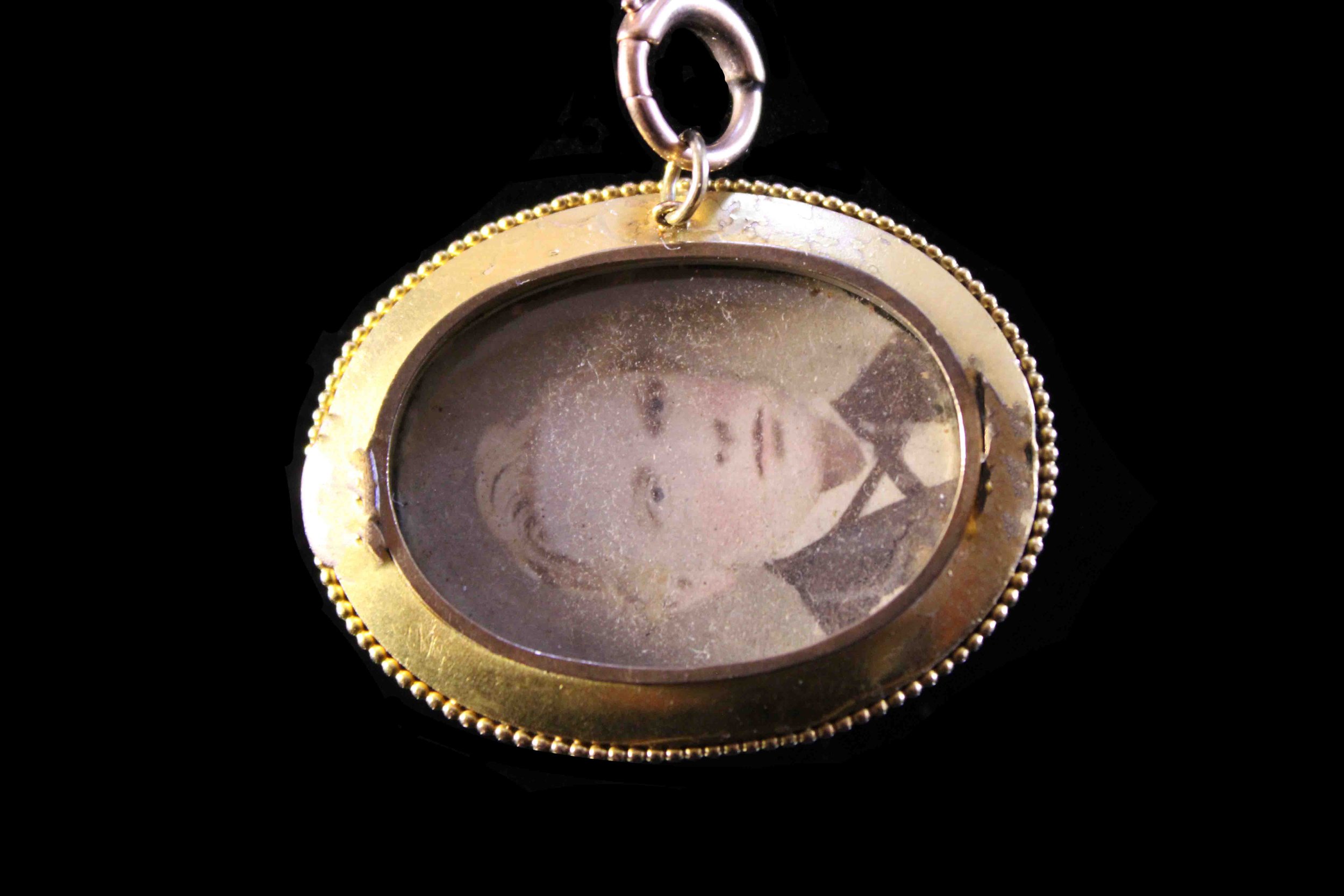 Image 2 of 5
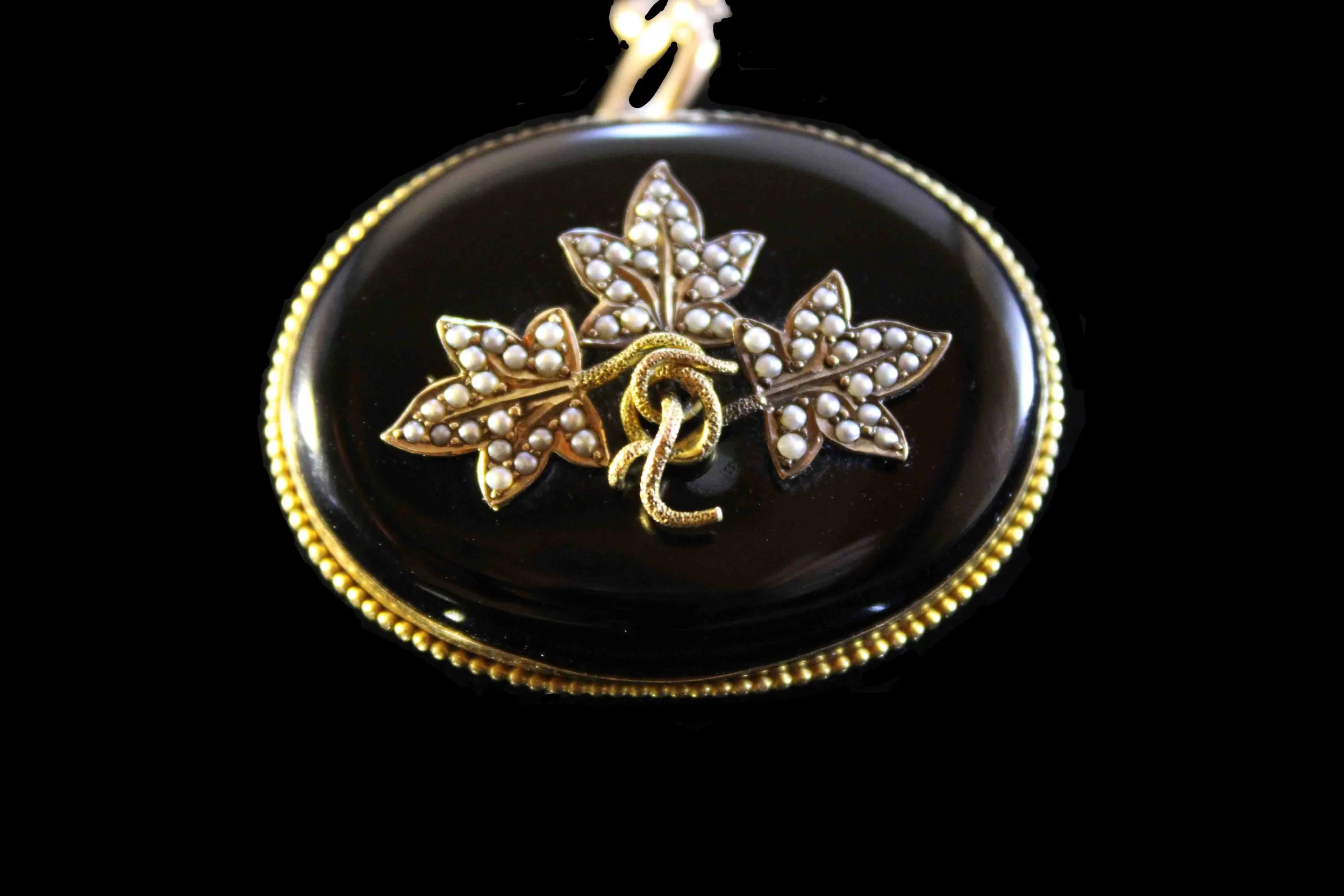 Image 3 of 5
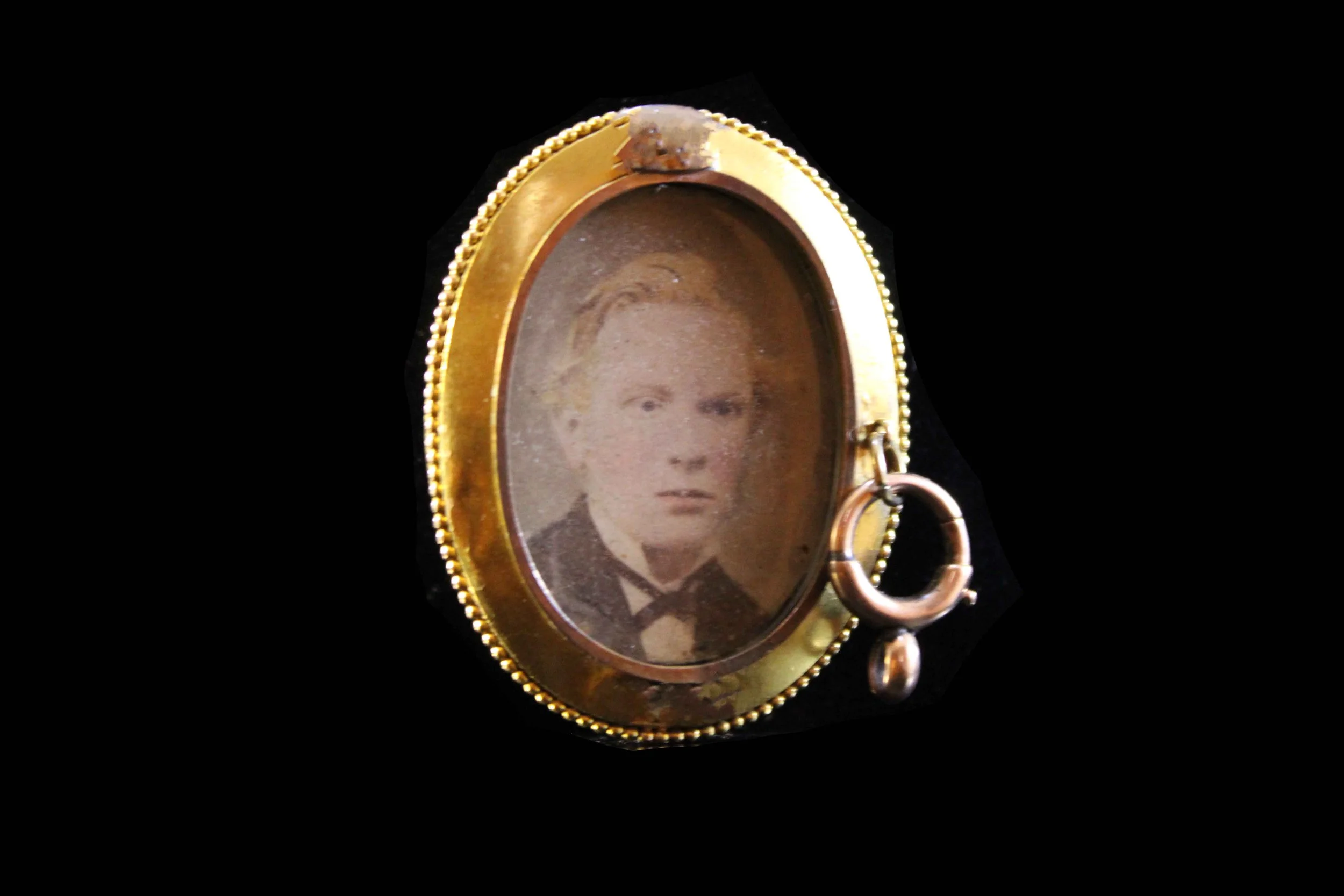 Image 4 of 5
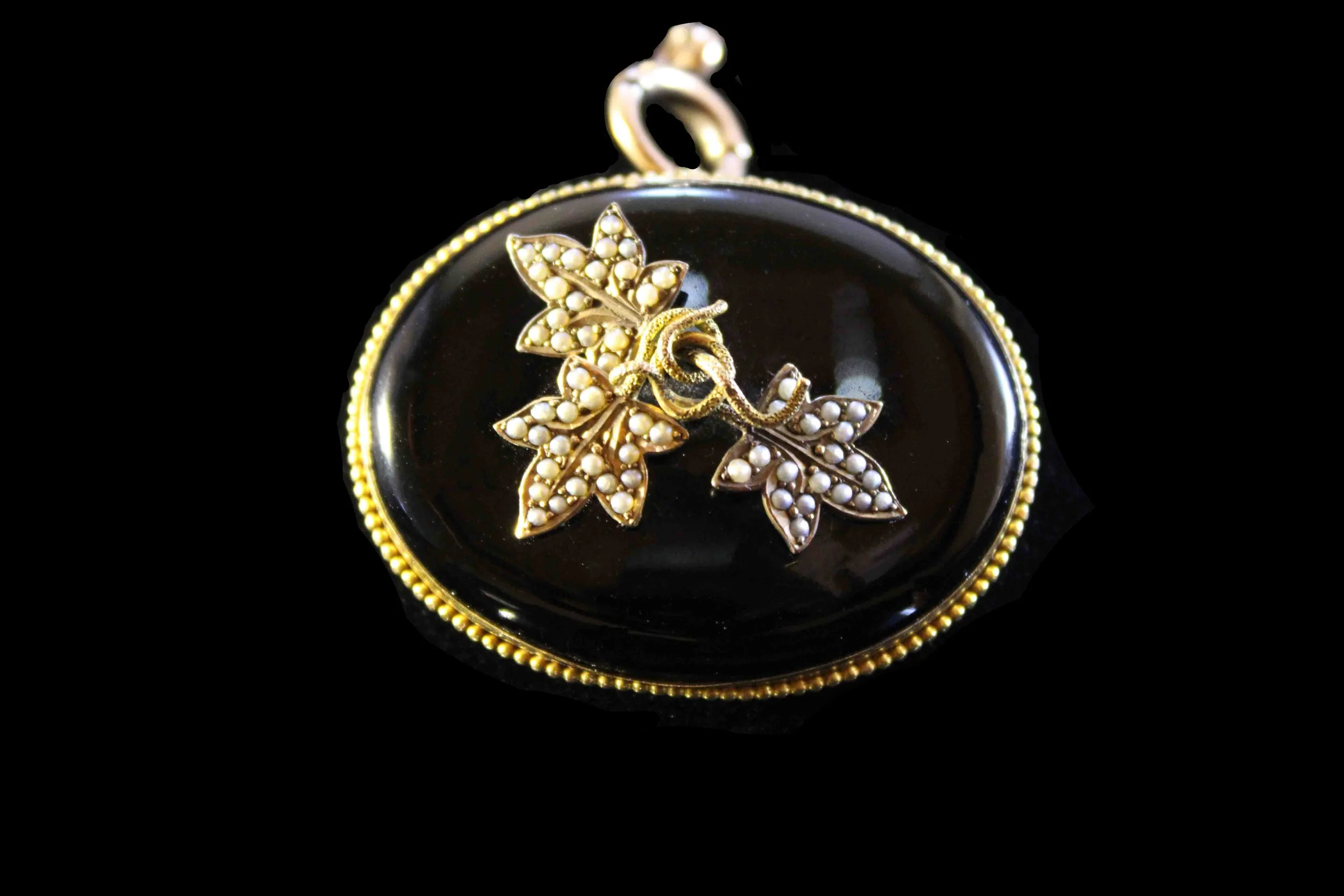 Image 5 of 5
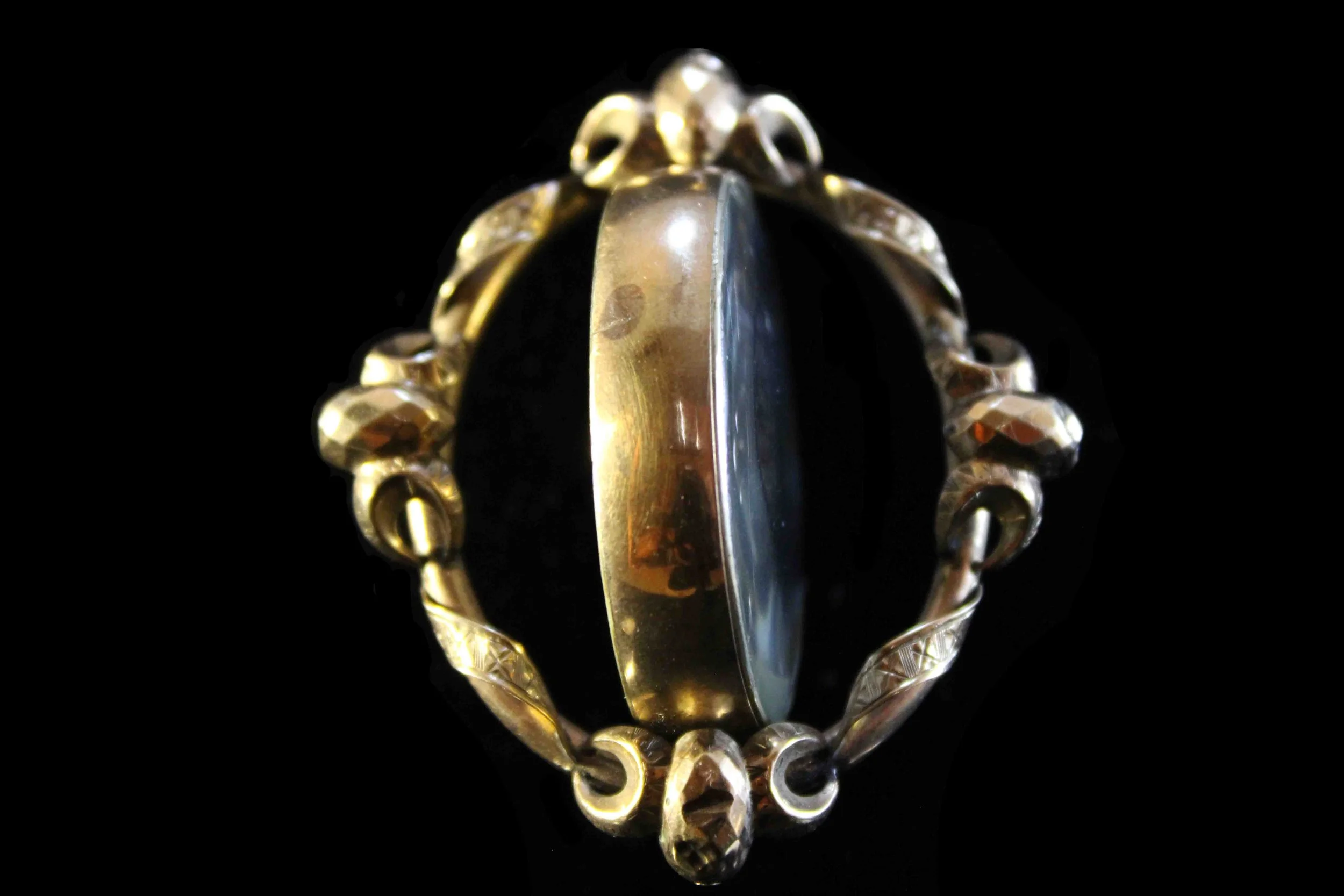
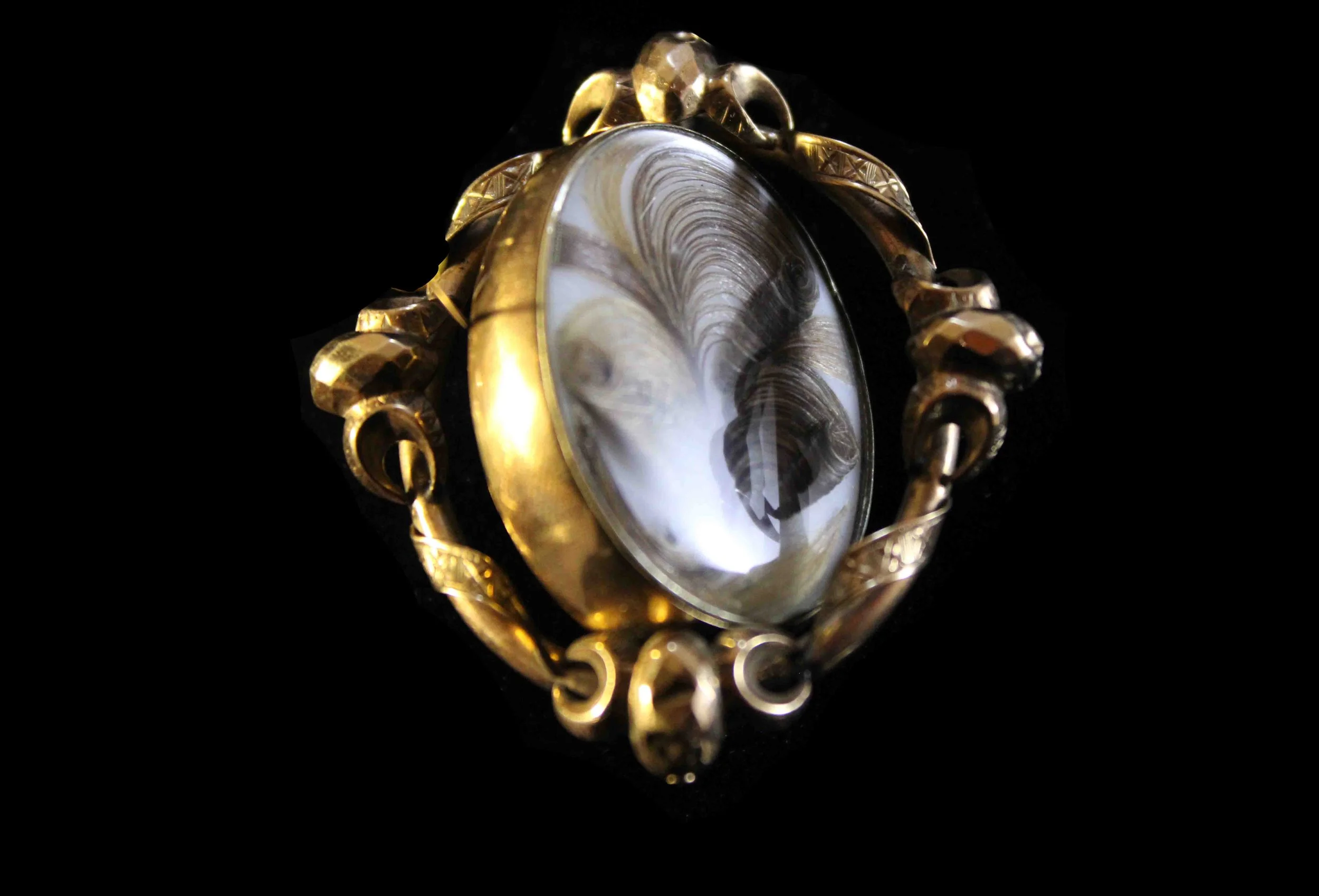
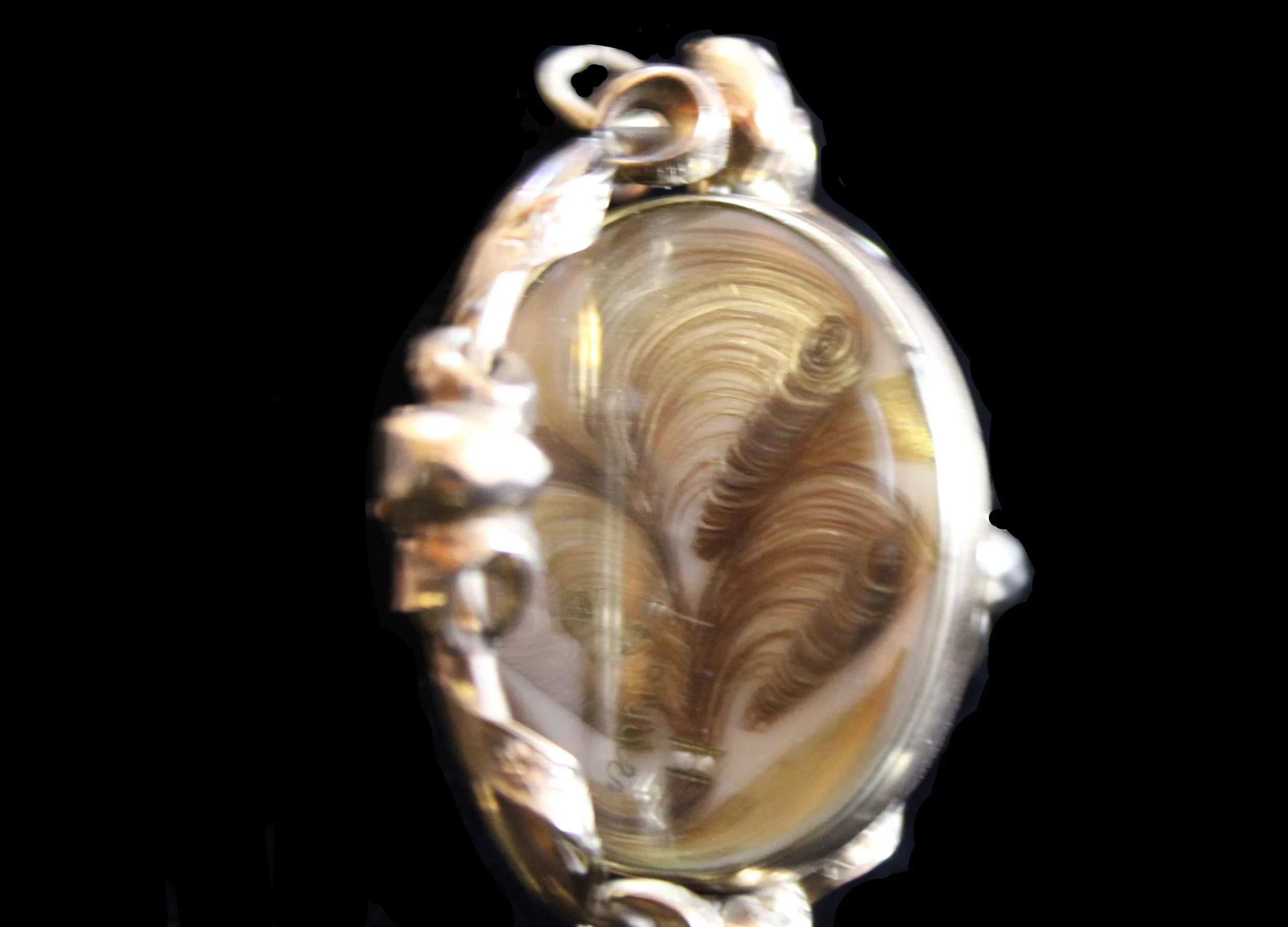
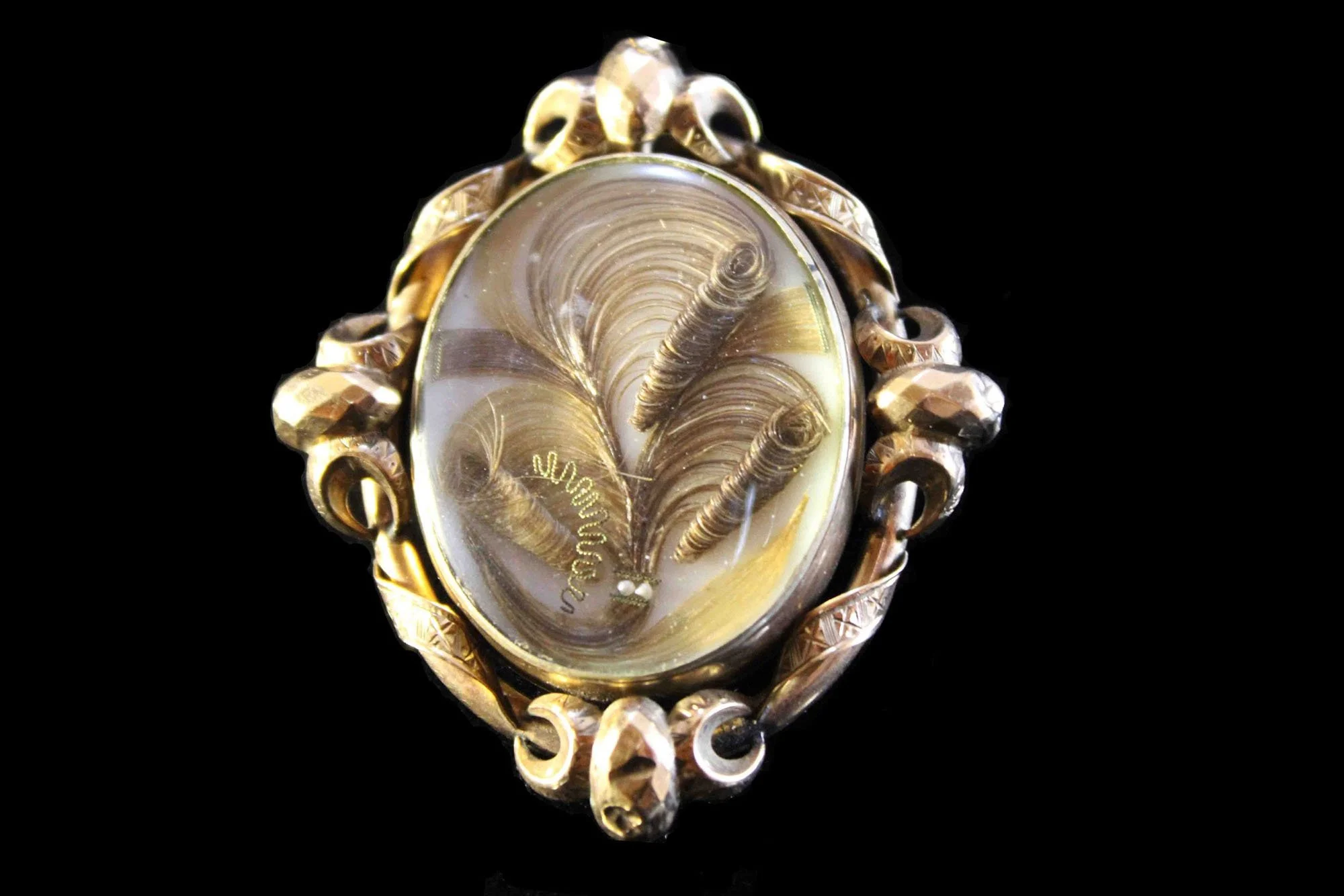
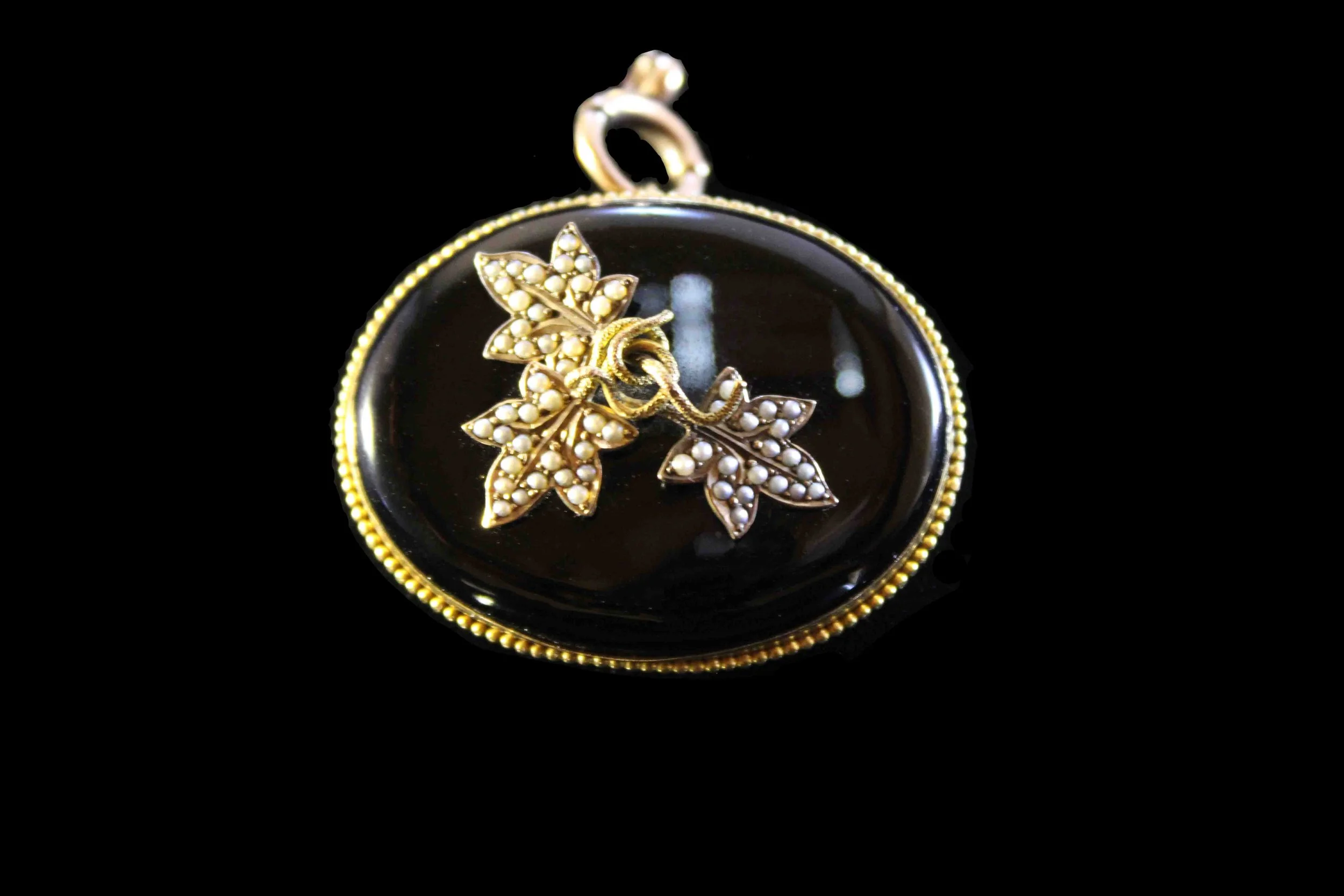
This Victorian mourning locket dates to the mid-to-late nineteenth century, a period in which black enamel jewelry occupied a central role in the visual language of grief and remembrance. The oval locket is finished in glossy black enamel, edged with a fine gold beaded border, and suspended from a period clasp designed for wear close to the body.
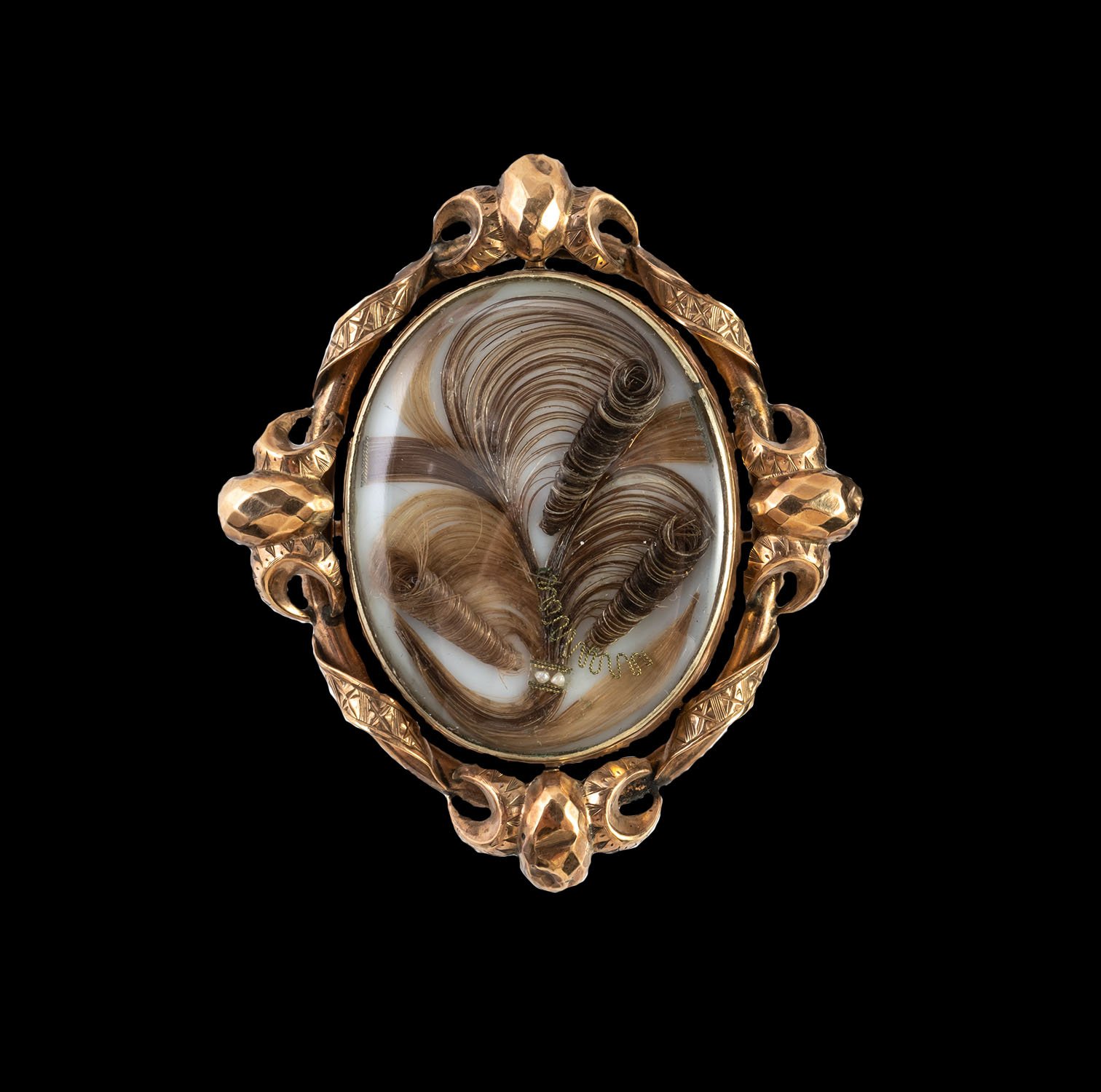
Applied to the locket face are three delicately modeled leaves, each set with seed pearls and tied together by a knotted gold ribbon motif. In Victorian symbolism, seed pearls were widely understood as representing tears, while leaves carried associations of nature, continuity, and the cycle of life. The knotted ribbon—a motif of binding and devotion—further reinforces the locket’s commemorative intent.
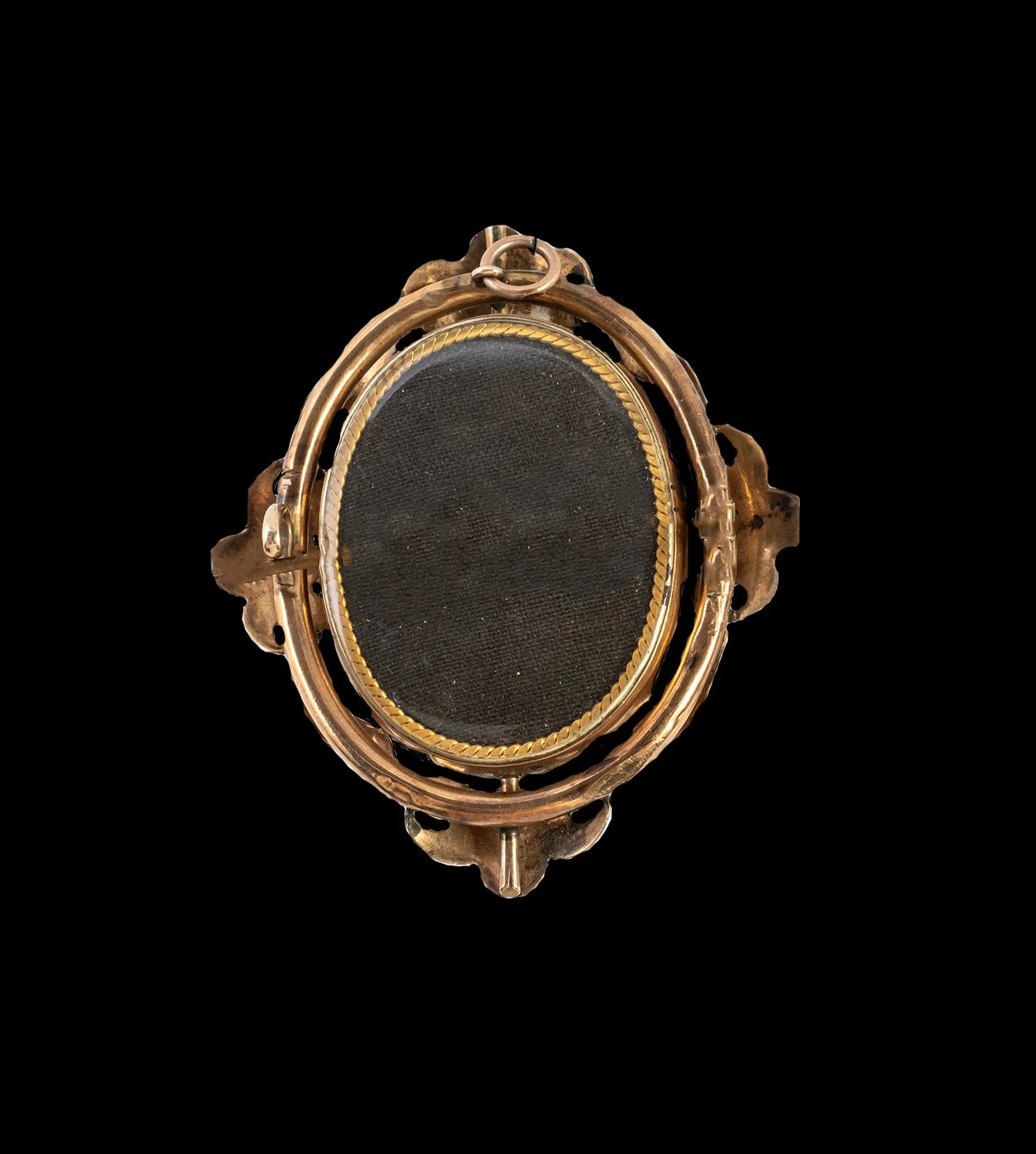
The reverse retains its original photographic portrait beneath glass, an intimate and personal inclusion that transforms the object from ornament into reliquary. Such photographic mourning lockets became increasingly prevalent following the mid-century rise of portrait photography, allowing likeness and memory to be preserved in wearable form.
The survival of both enamel surface and photographic insert is notable, as these elements were especially vulnerable to wear. Together, they place this locket firmly within the tradition of Victorian mourning jewelry as both social signal and private archive—an object meant to be read by those who understood its language, and quietly held by its wearer.
Purchased at auction Stamford, United Kingdom.