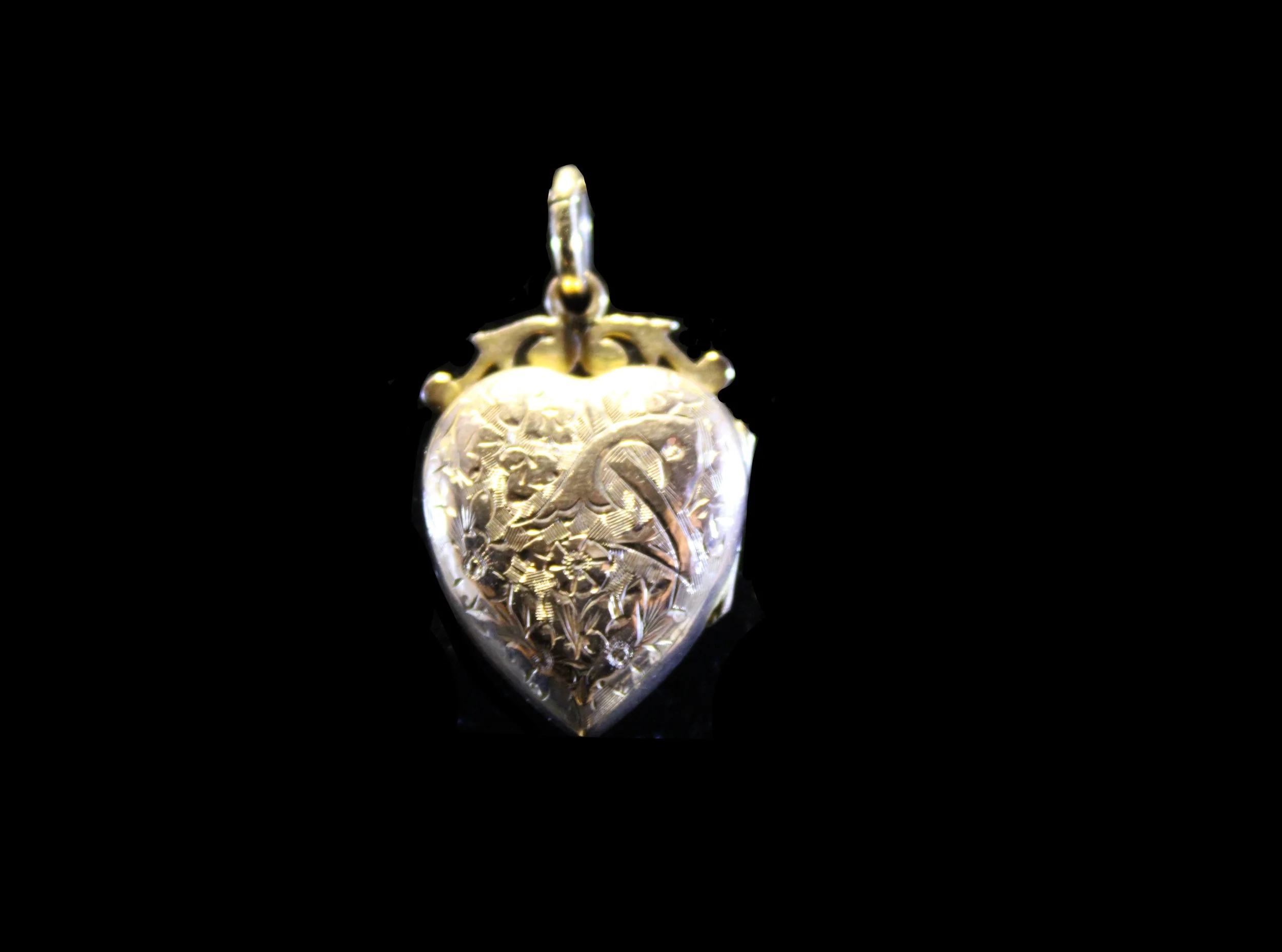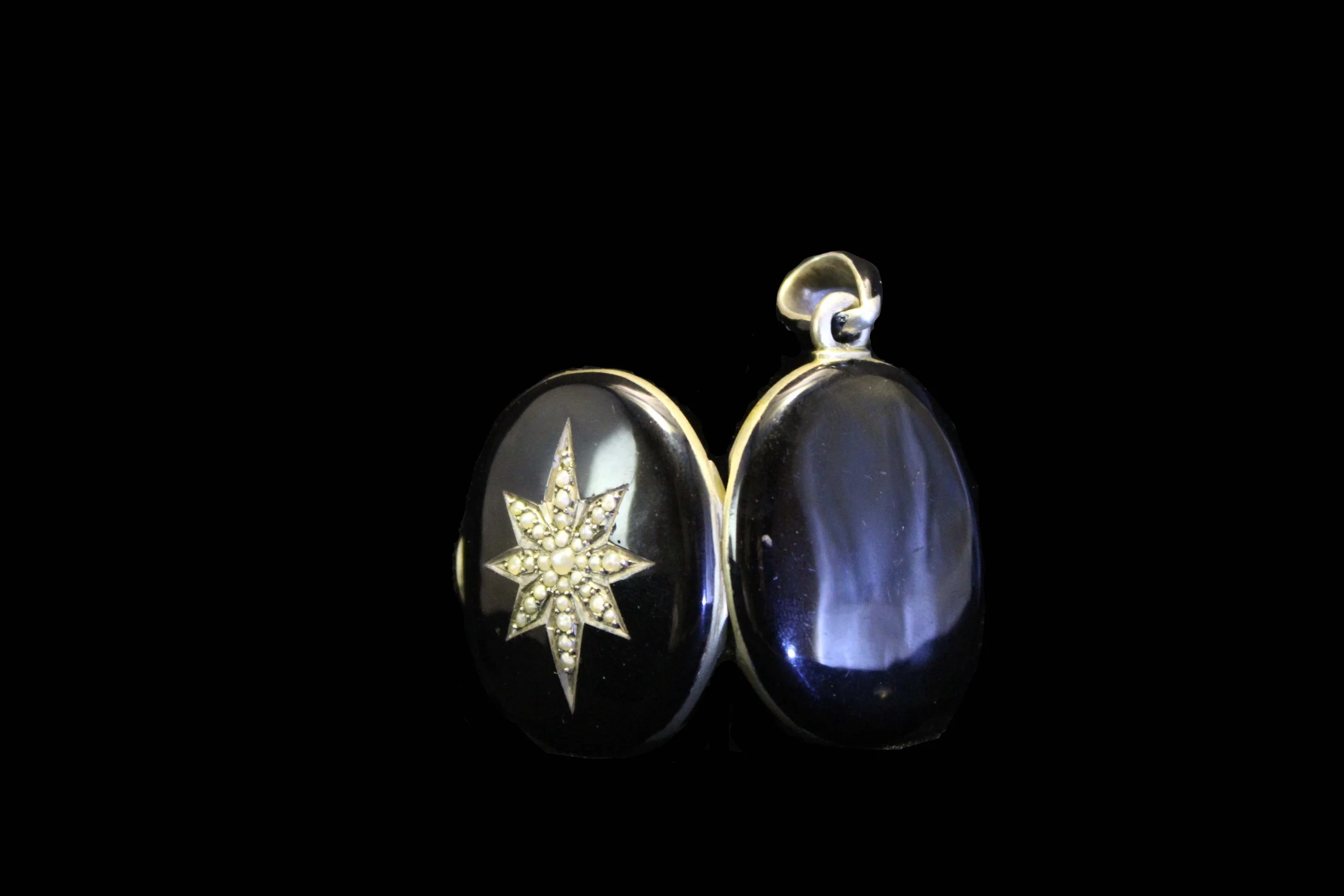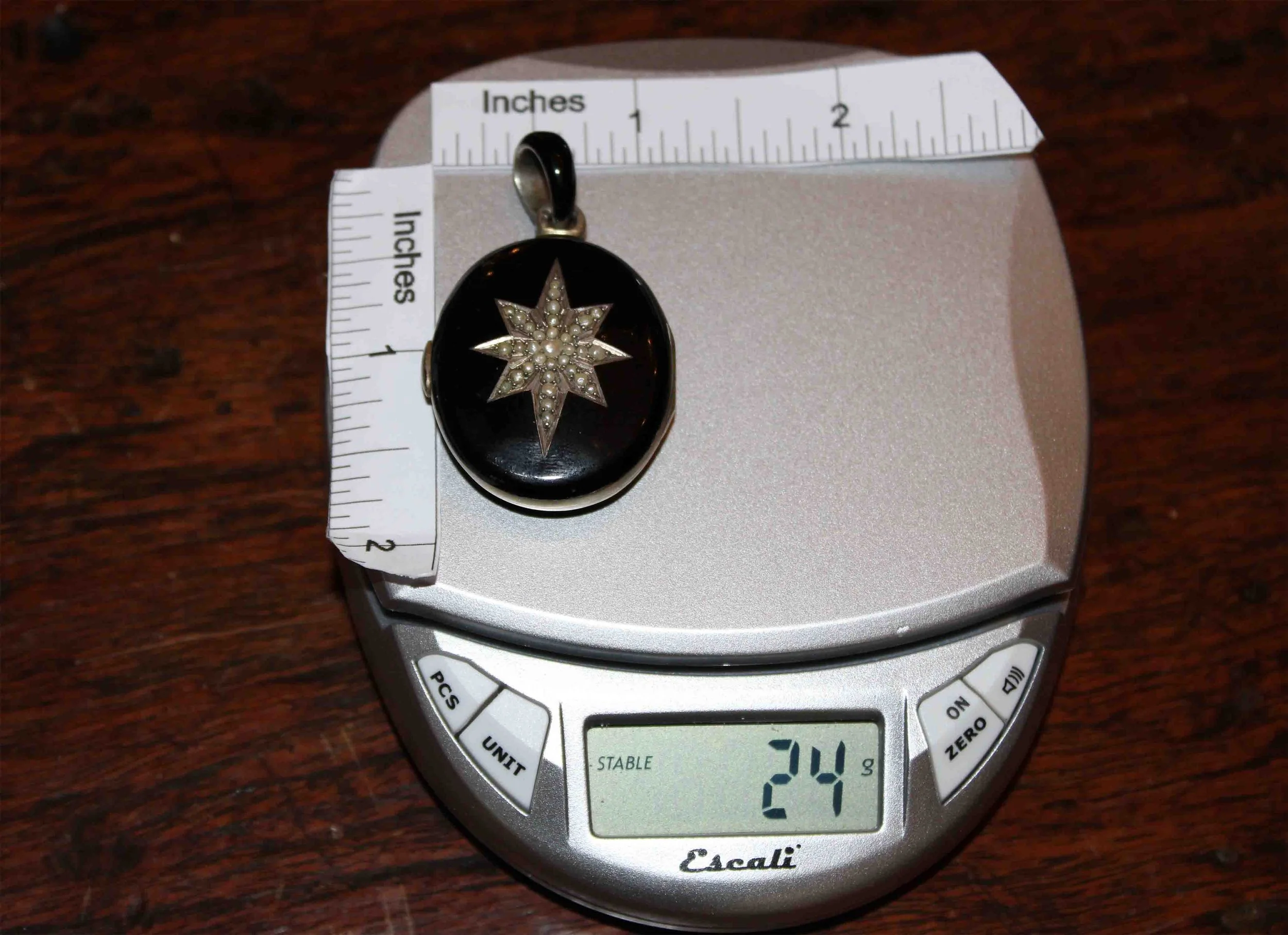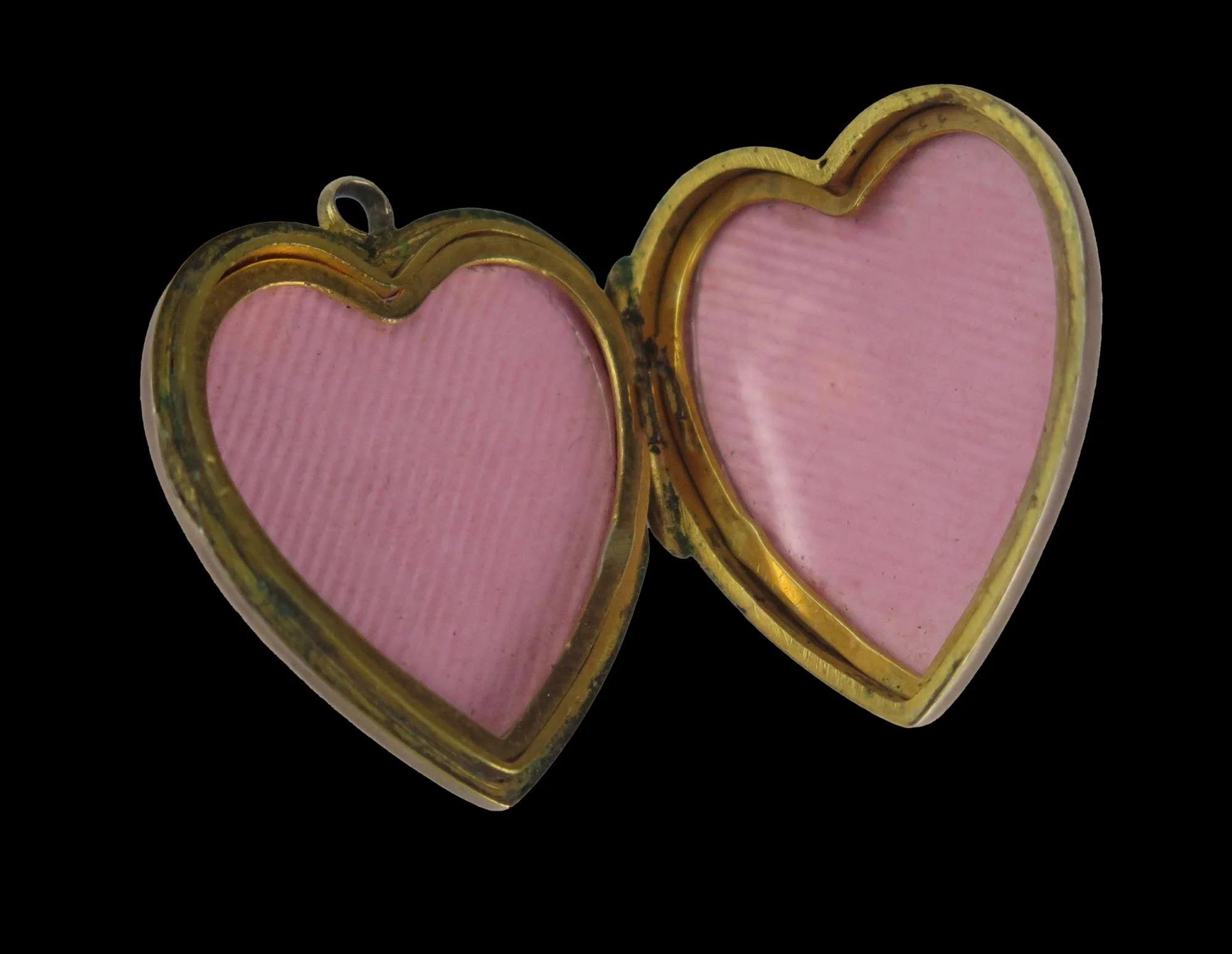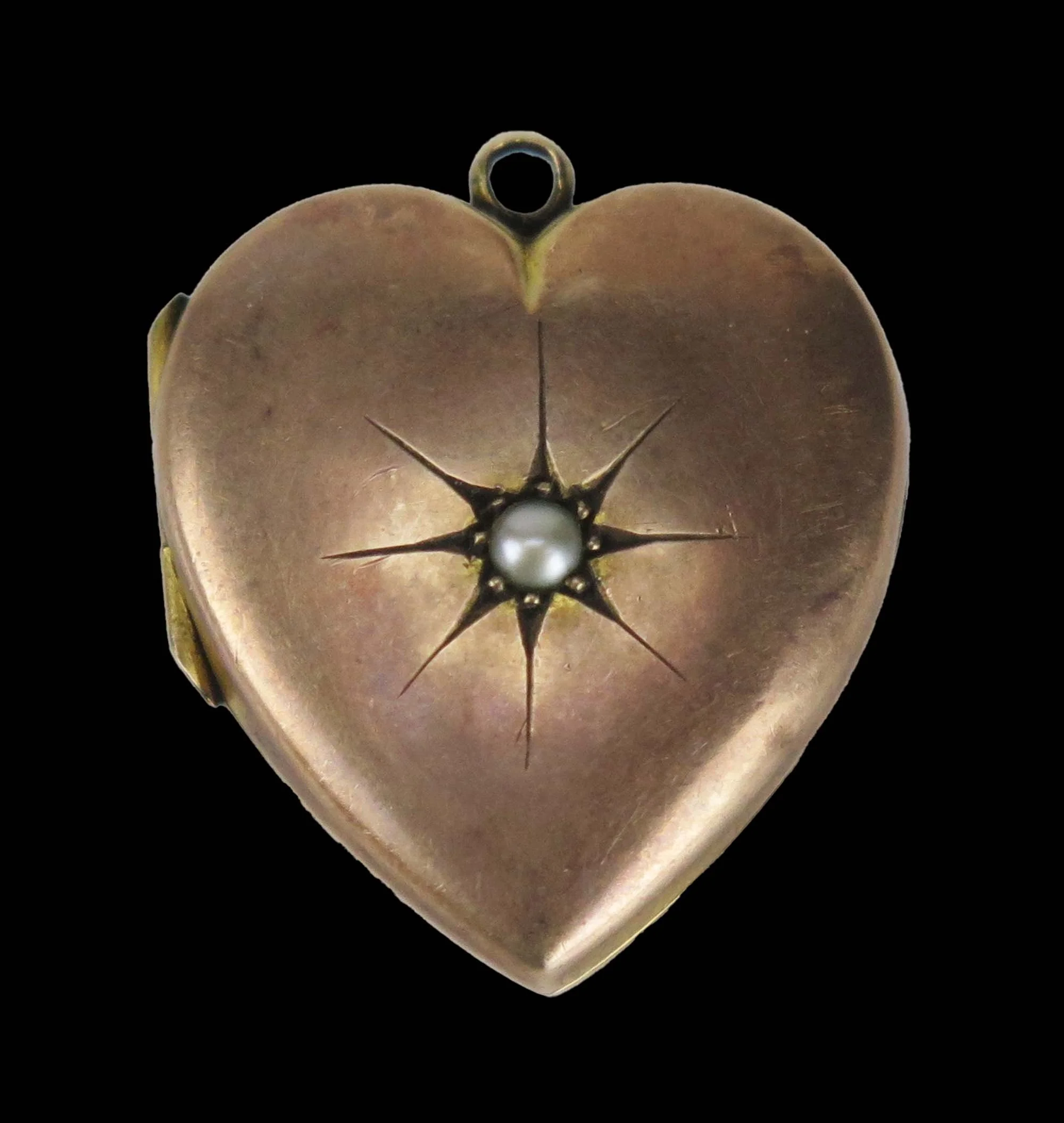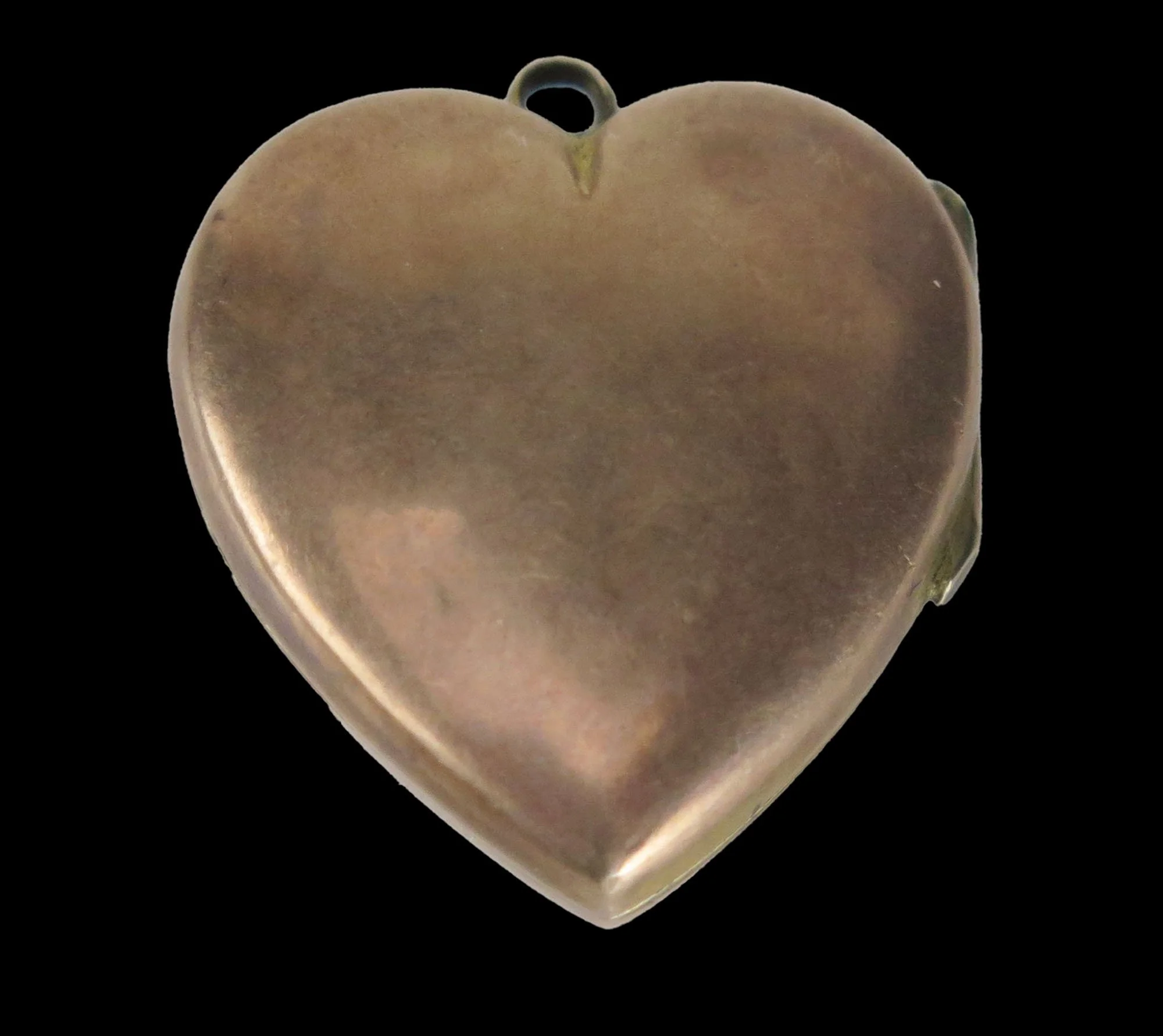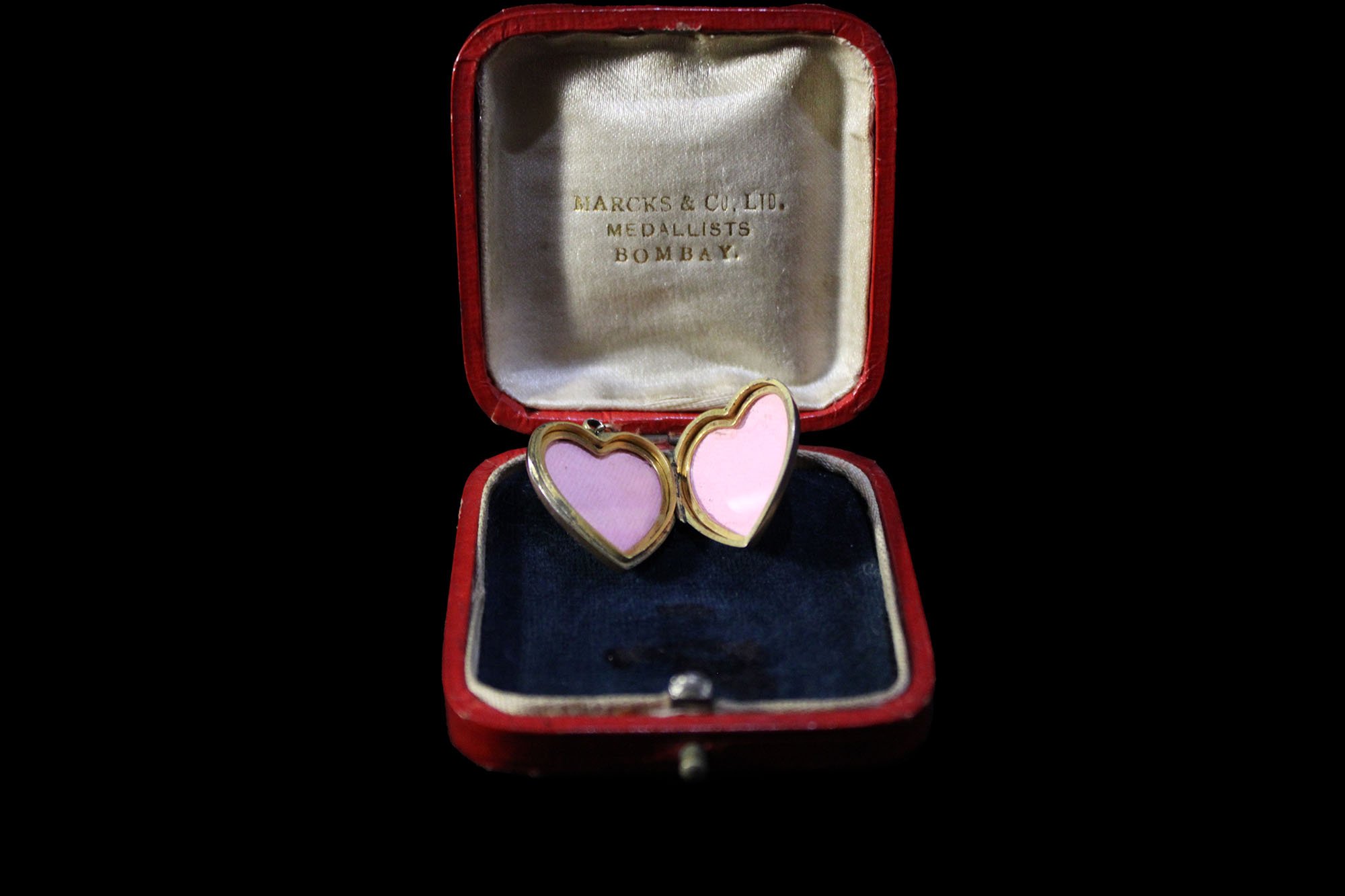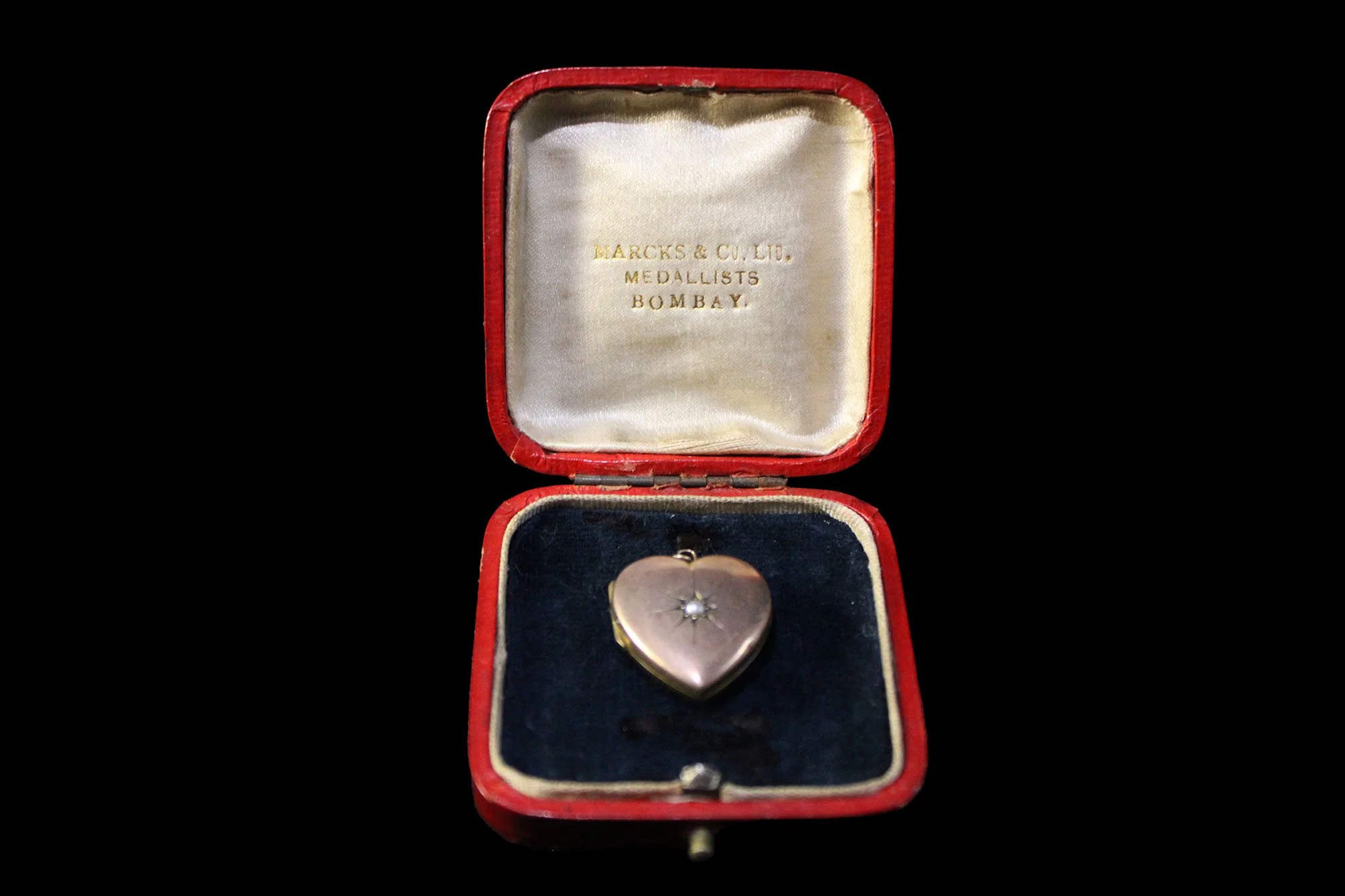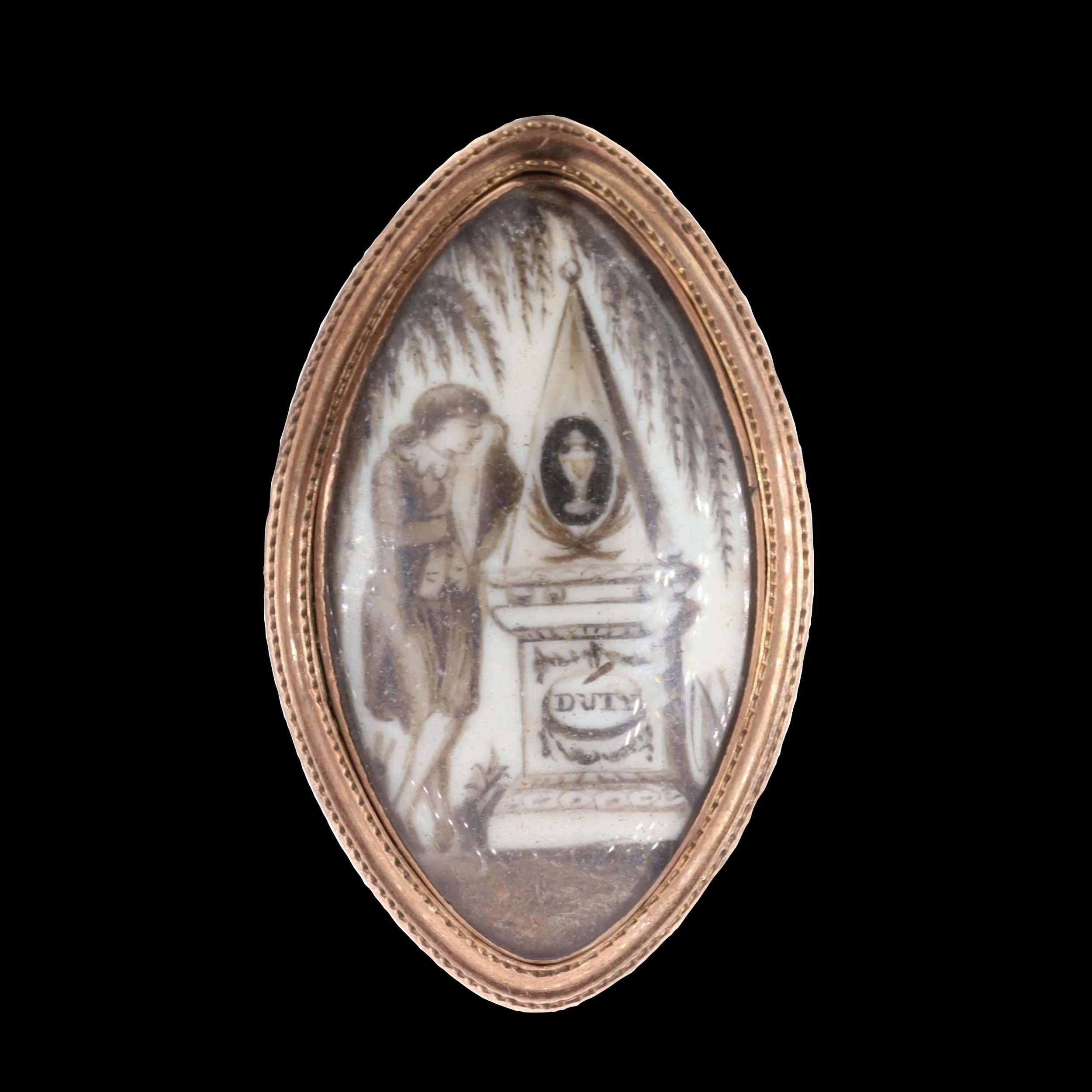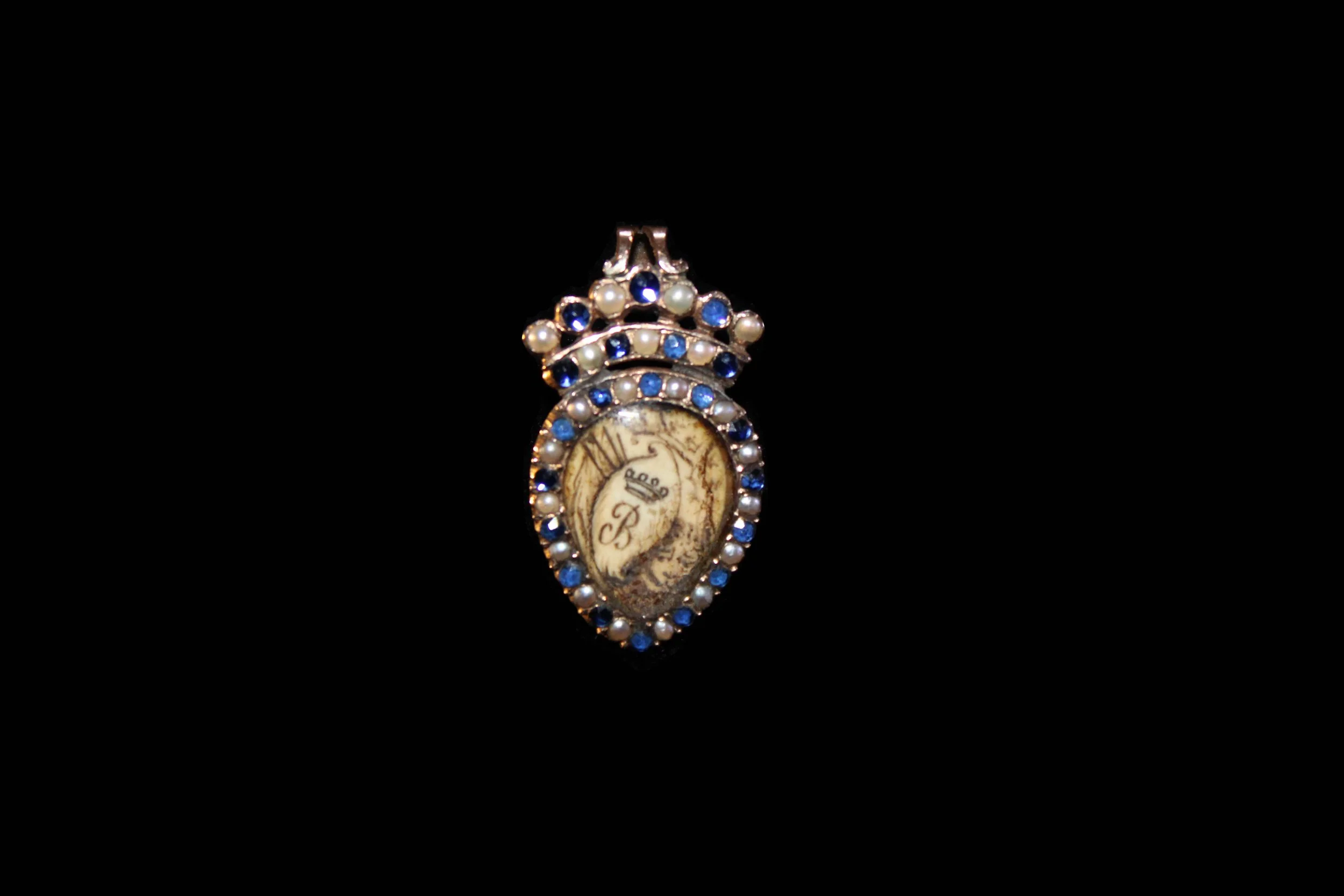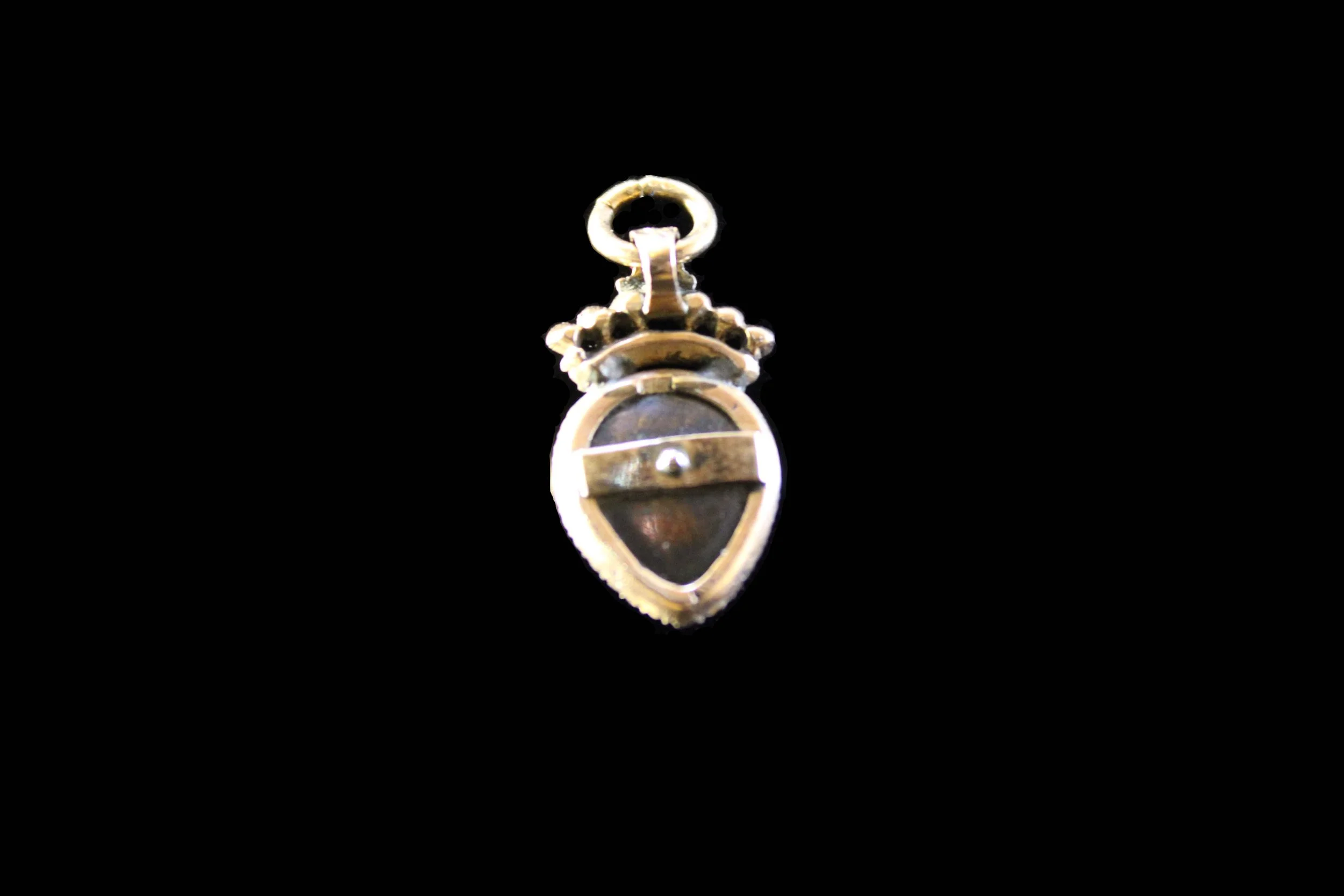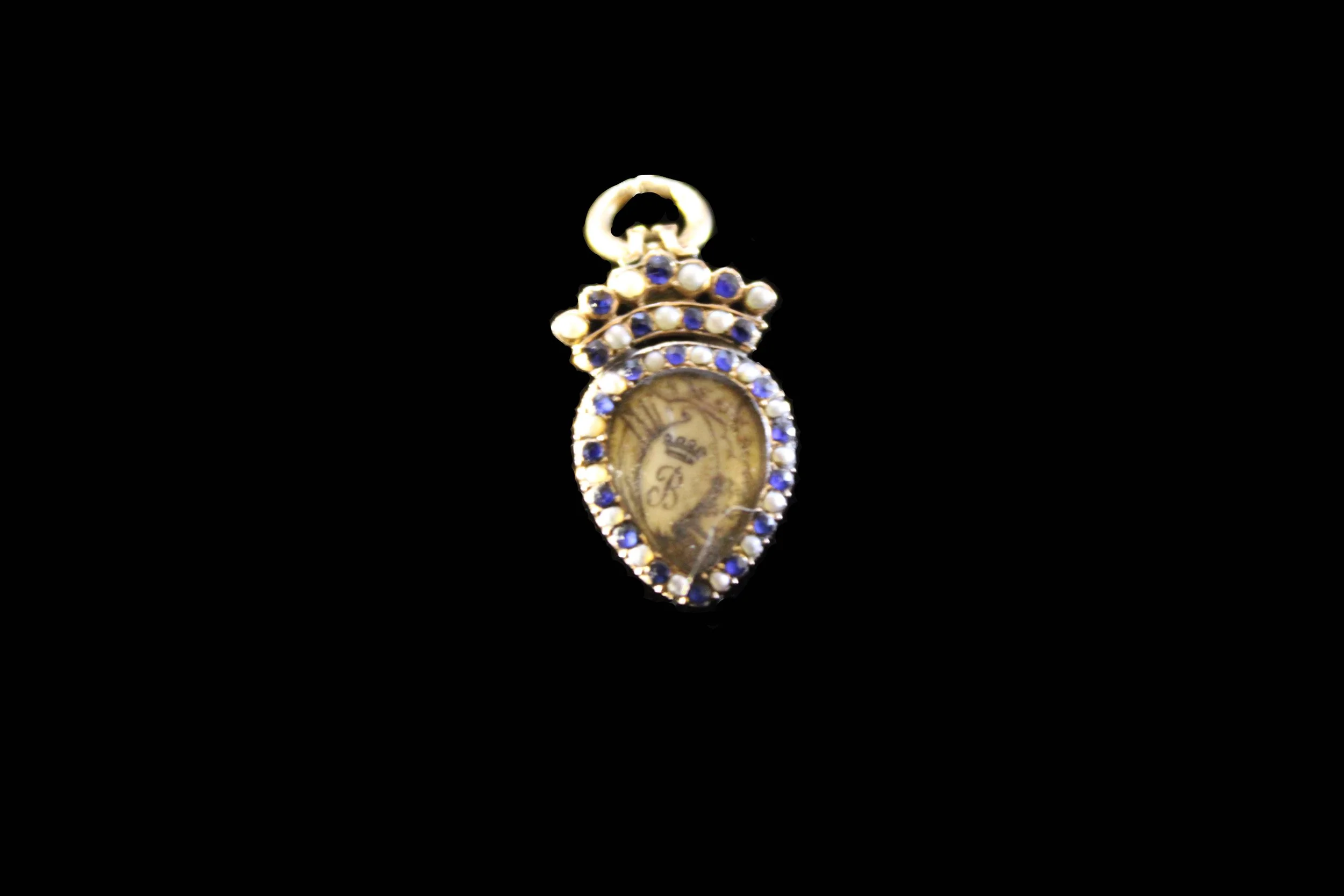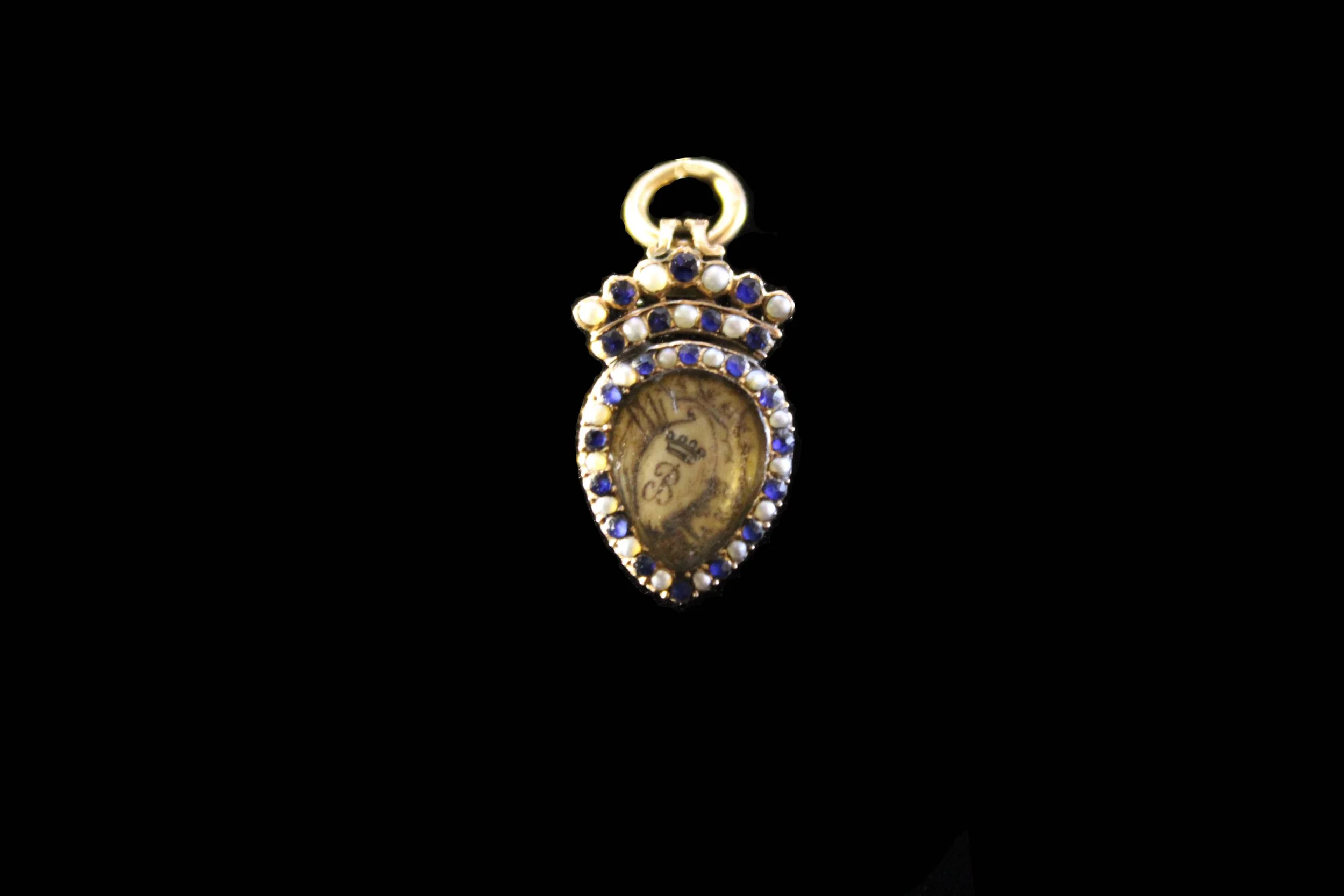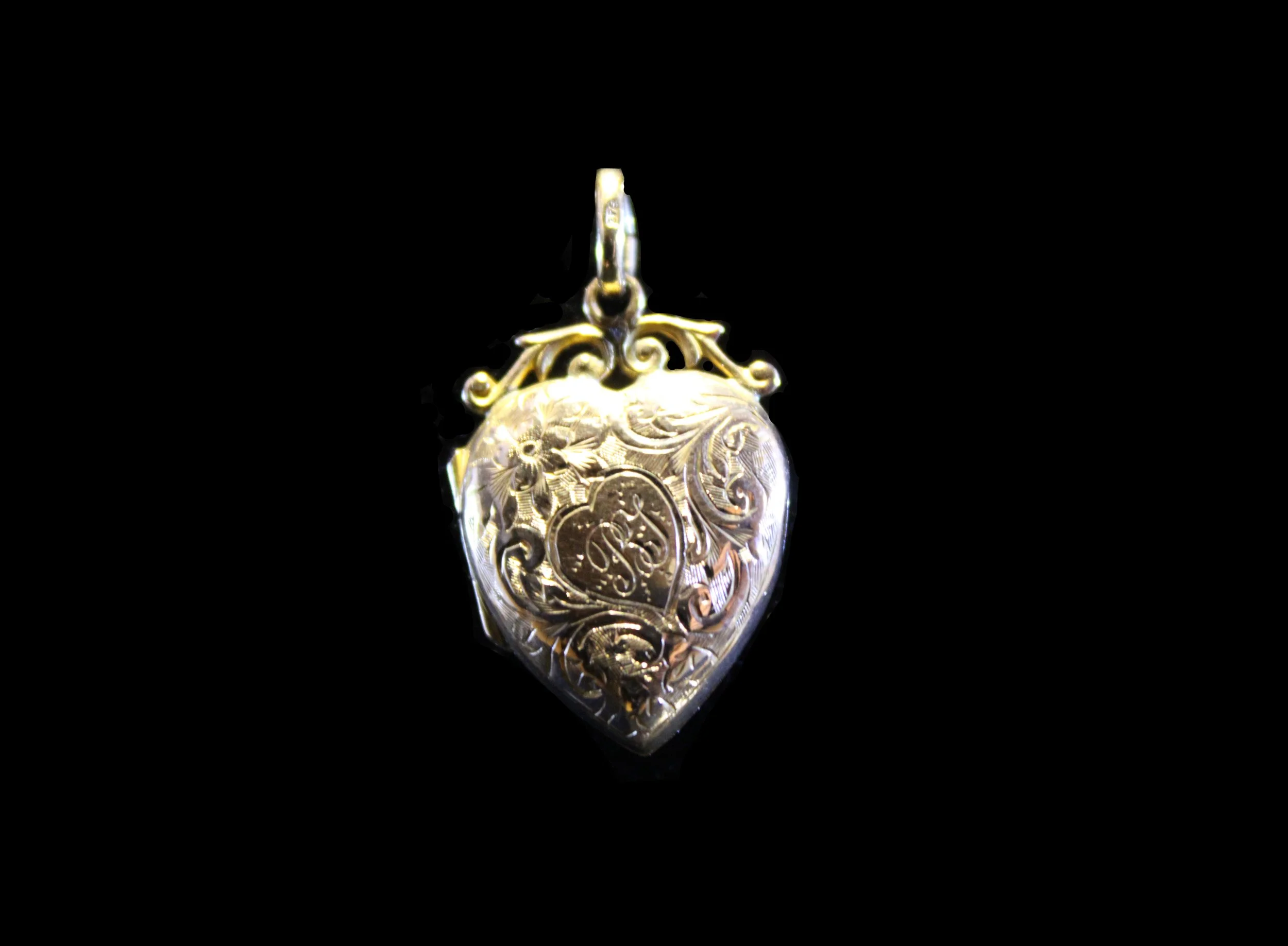
This finely crafted heart-shaped locket exemplifies the 19th-century European tradition of sentimental jewelry, in which personal memory, identity, and ornament were deliberately intertwined. The locket’s exterior is densely hand-engraved with scrolling floral and foliate motifs, a level of surface ornament characteristic of skilled goldsmithing intended for objects worn close to the body rather than for public display. At the center of one face, a monogrammed cartouche personalizes the jewel, marking it as a private object of ownership or devotion. Such monograms often recorded the initial of a loved one, a spouse, or the wearer, transforming the locket into a vessel of personal narrative. The heart form itself—long associated with the soul, fidelity, and emotional constancy—signals the locket’s function as a container for intimate keepsakes, such as a miniature portrait, lock of hair, or written remembrance.
Lockets of this type occupied a liminal space between adornment and reliquary. Worn discreetly beneath clothing, they served as tangible links to absent or deceased loved ones, embodying the Victorian impulse to preserve memory through material culture. The careful engraving and balanced proportions of this example reflect an object made not for fashion alone, but for enduring personal significance. Combining craftsmanship with quiet symbolism, this locket stands as a testament to the 19th-century belief that jewelry could act as a keeper of memory—an heirloom designed to carry sentiment across generations.