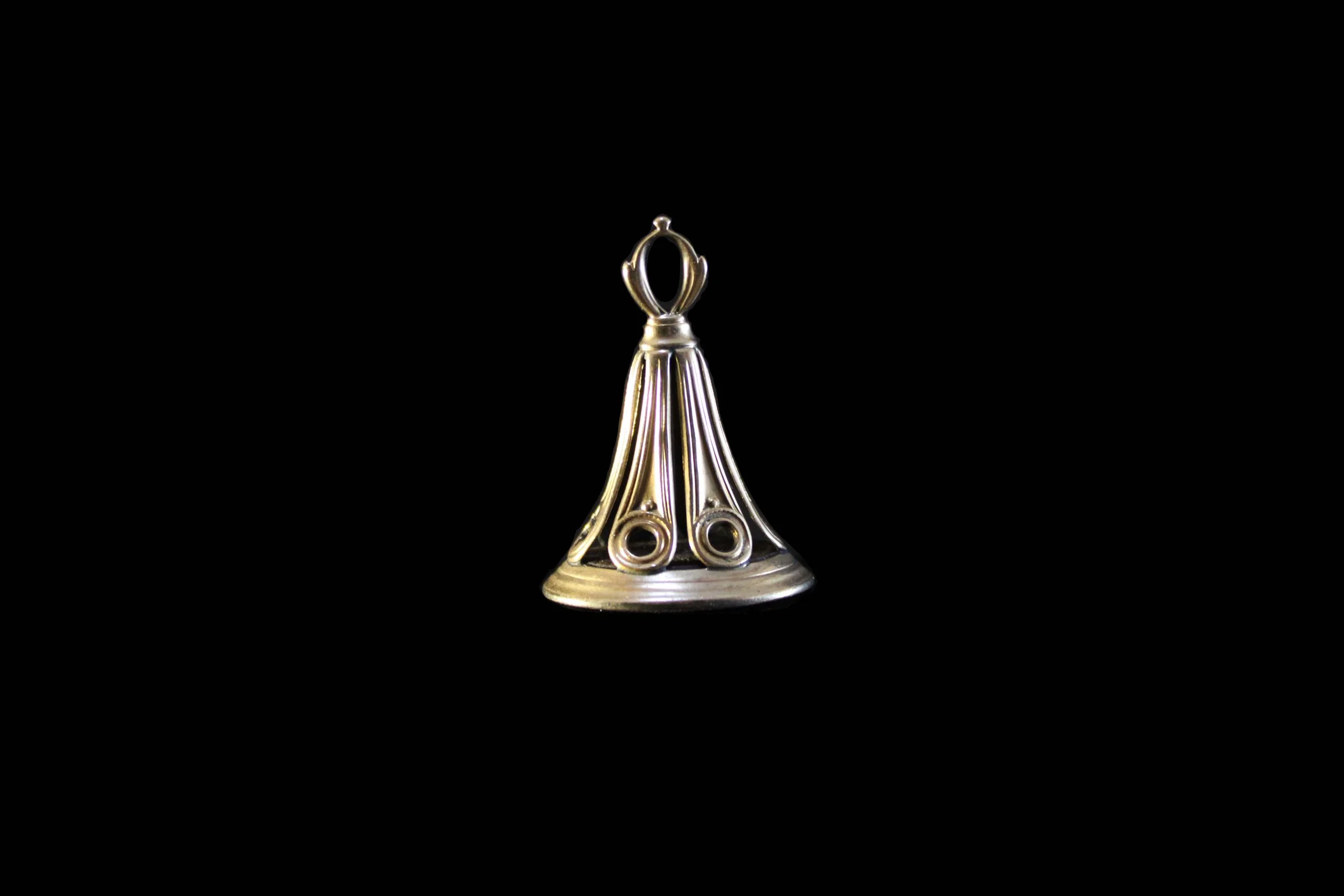
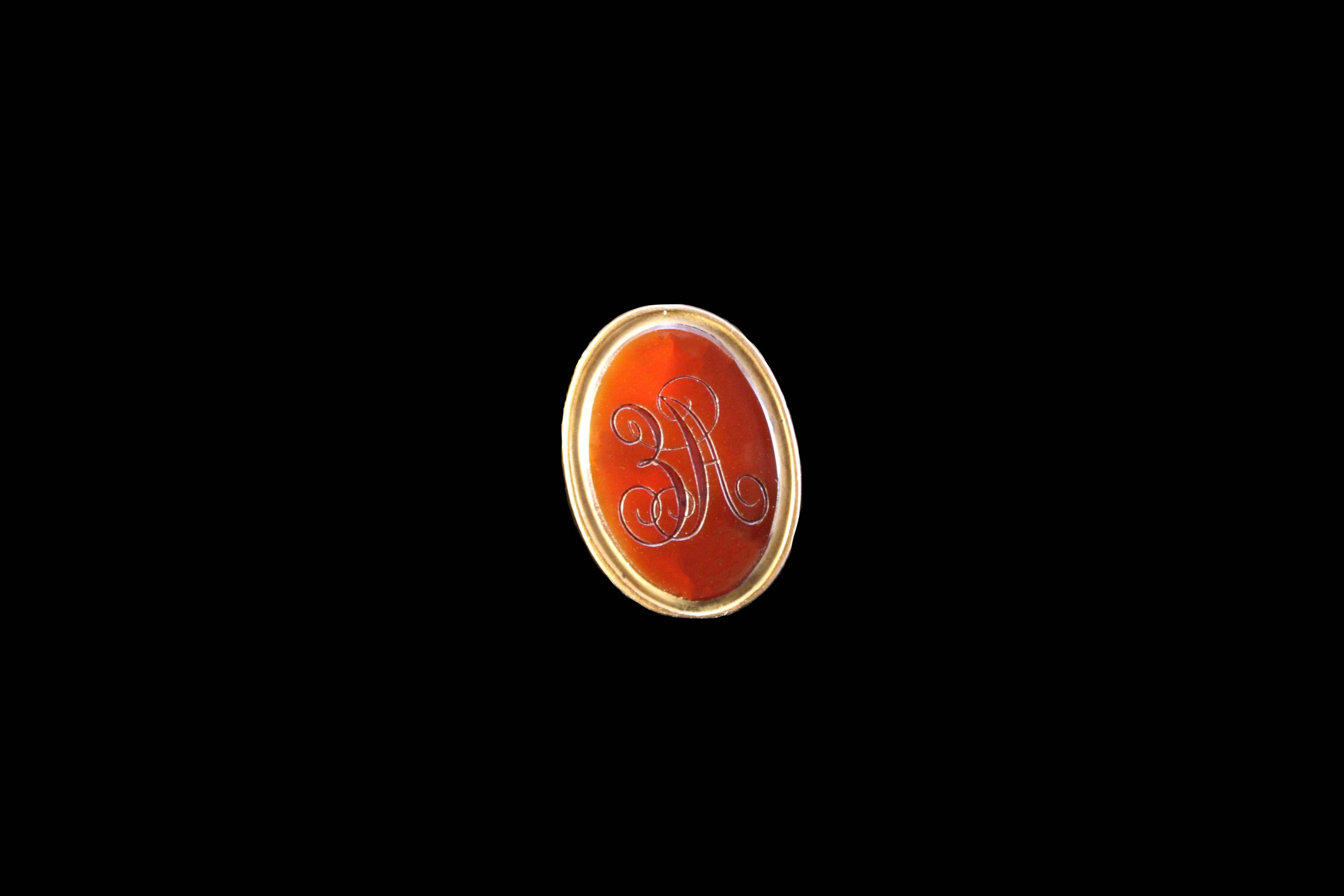
 Image 1 of 1
Georgian Sepia Mourning Pendant in Gold, 1802 Inscribed
Georgian Sepia Mourning Pendant
England, Georgian period, circa 1802–1810
Sepia on ivory (or ivorine); tested 9ct gold mount
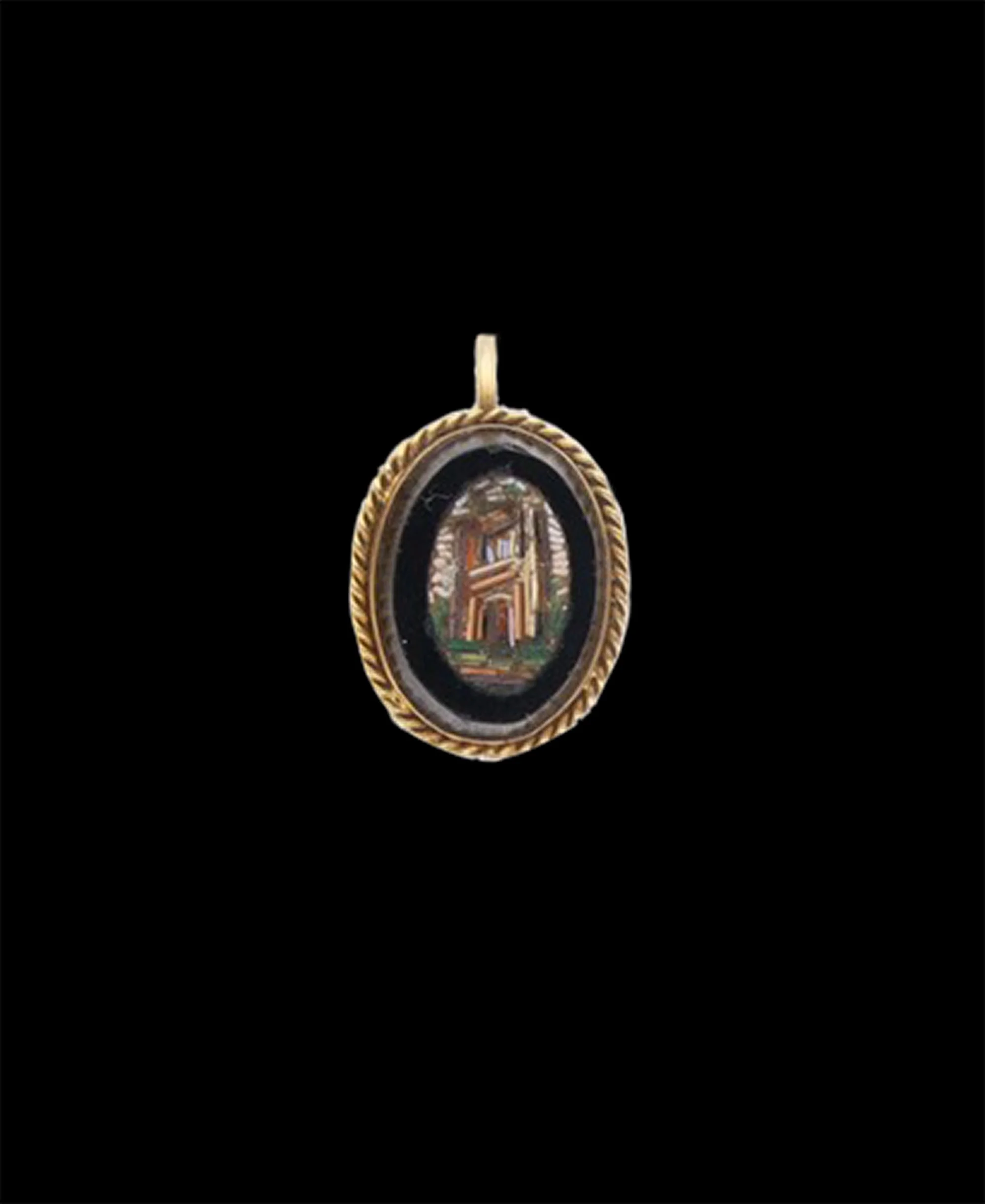
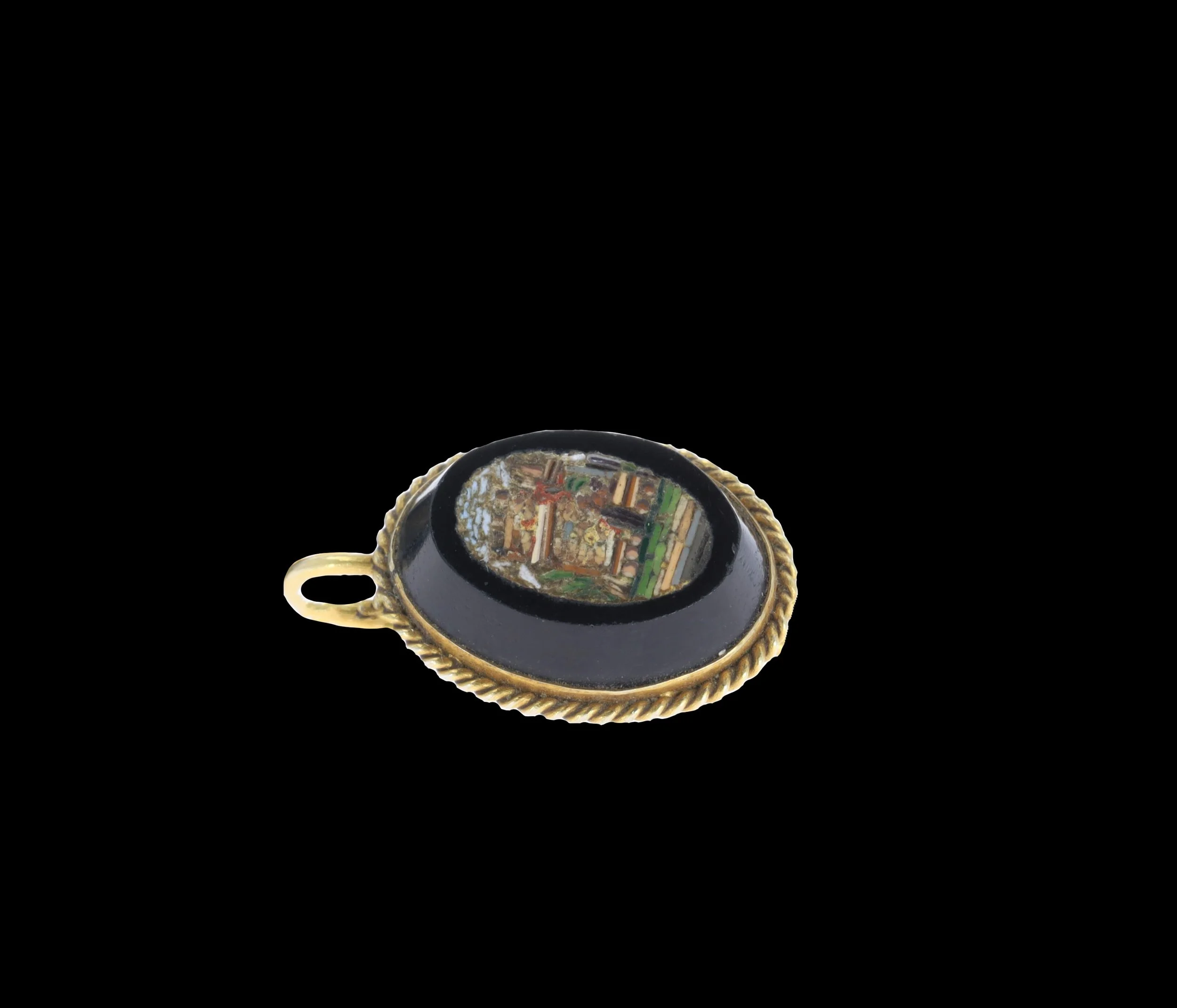
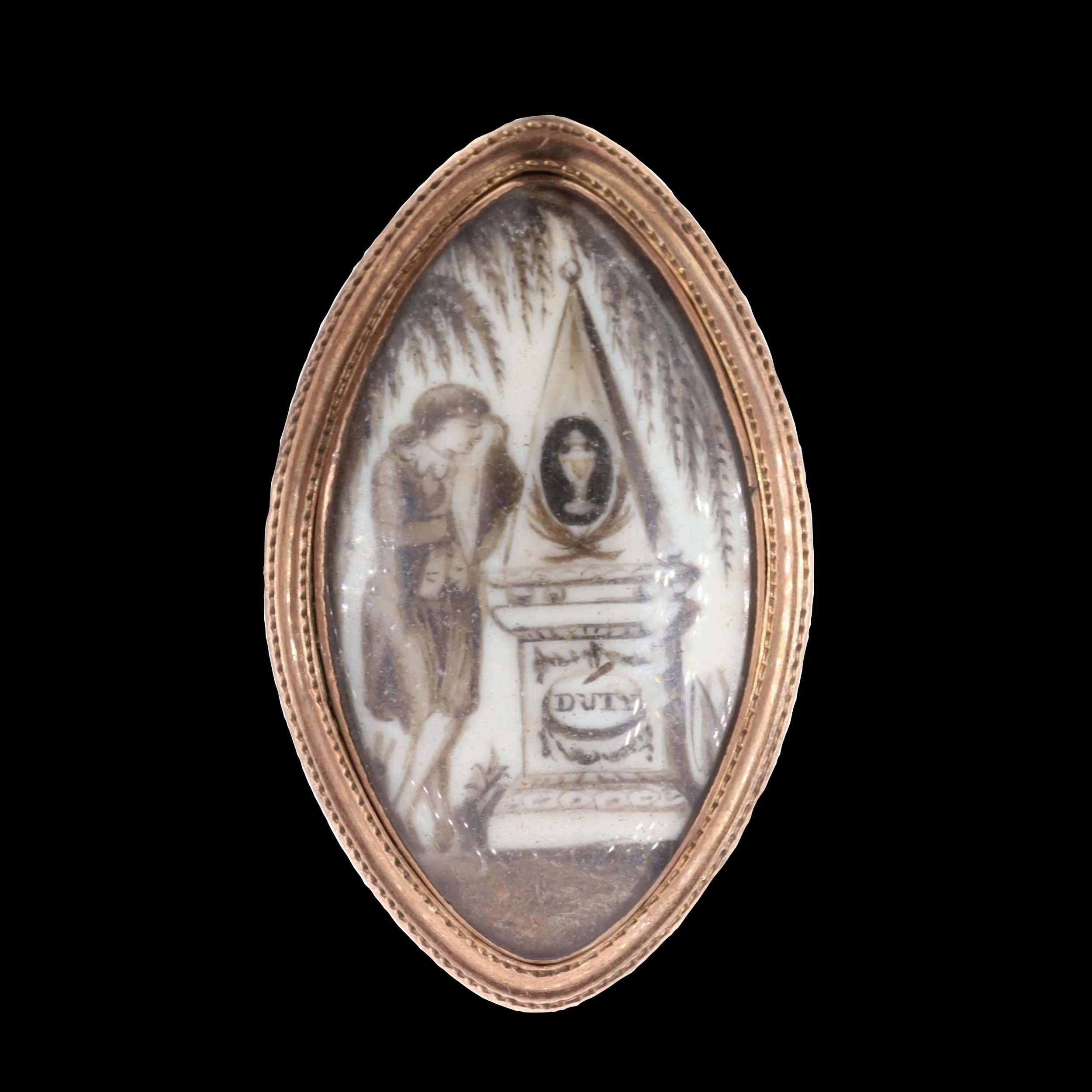
This refined Georgian mourning pendant presents a carefully executed sepia memorial scene, preserved beneath a domed cover and mounted in tested 9-carat gold. The composition depicts a solitary mourner beside a funerary monument surmounted by a draped urn containing a portrait medallion—iconography emblematic of early nineteenth-century British mourning art, where classical allegory was employed to express loss, remembrance, and moral virtue.
Rendered in restrained monochrome, the image remains clear and crisp, demonstrating the technical skill of the sepia painter and the protective integrity of the mount. The gold setting, formed in an elongated oval with a finely worked border, reflects Georgian taste for classical proportion and quiet ornament, allowing the image to command primary focus.
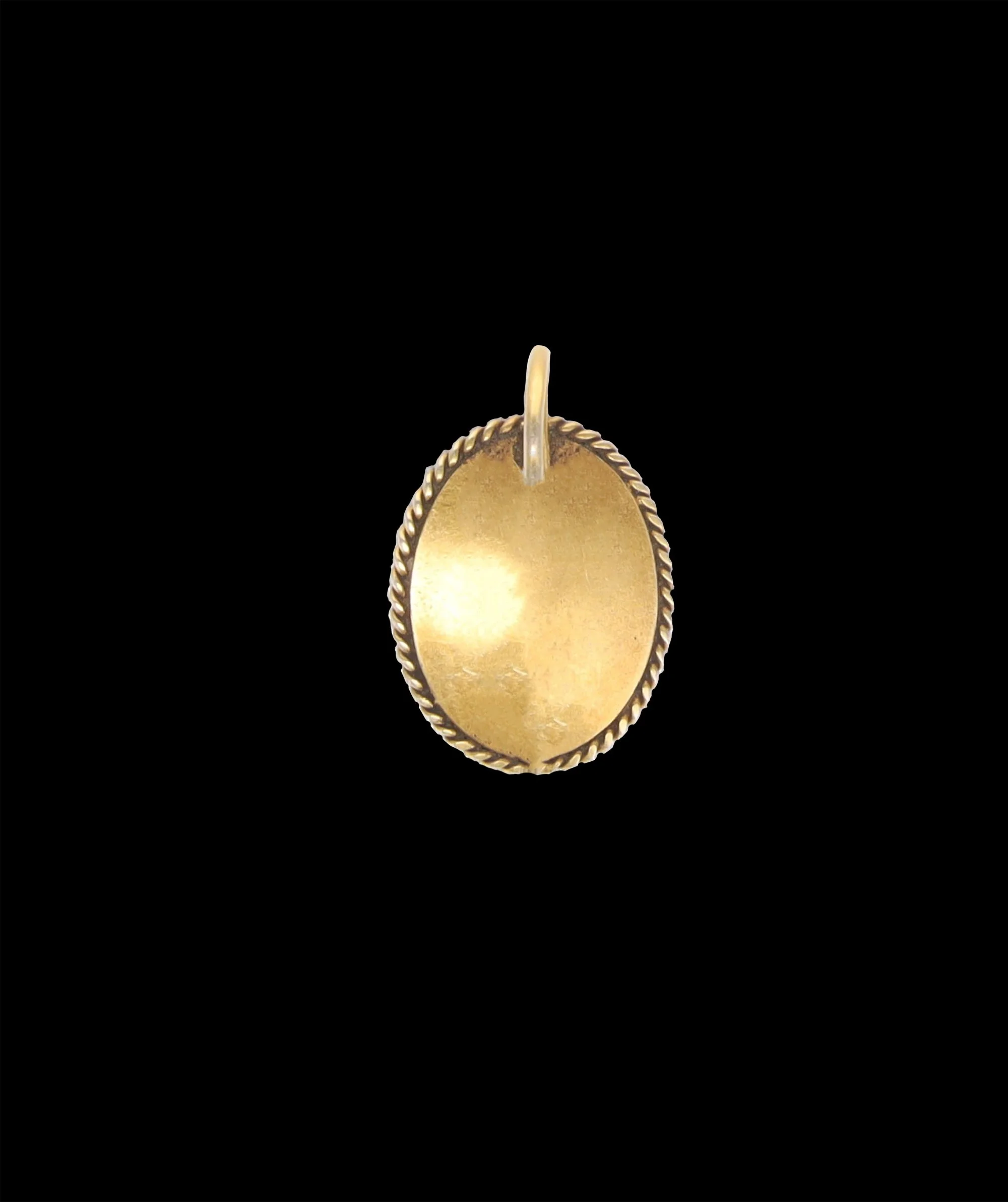
The reverse bears a handwritten inscription recording the deceased:
“C William died October 1802 aged 76”
Such inscriptions are central to the purpose of mourning jewels of this period, transforming adornment into intimate biography and anchoring the object firmly within the lived experience of grief, love and commemoration.
Measuring approximately 1.3 inches in length and 1 inch at its widest point, and weighing 5.0 grams, the pendant possesses a dignified presence without excess. Surviving in strong condition with legible inscription and well-preserved imagery, it stands as a poignant artifact of Georgian mourning culture—where sentiment, craftsmanship, and personal history were inseparably entwined. Preserving love in gold for all time.
Purchased at auction Bradford, United Kingdom